OLED technology enables thin, efficient and bright displays and lighting panels. OLEDs are currently used in many mobile devices, some TVs and lighting fixtures. OLED displays offer a better image quality compared to LCD or Plasma displays - and can also be made flexible and transparent.
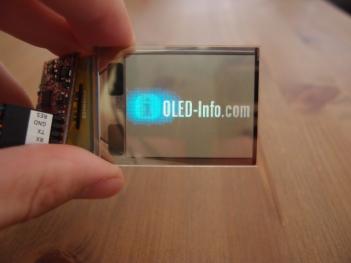
Transparent OLED displays
Several companies develop transparent OLED (also referred to as T-OLED) technologies. While there's no inherent technology barrier towards transparent OLED displays, finding actual applications for such displays is not easy.

Today, LG Display is producing large-area transparent OLEDs - in sizes ranging from 30-inch to 77-inch. These are mostly used in signage and commercial settings. Some PMOLED producers are offering small (around 1-2 inch in size) transparent OLEDs.
Transparent OLED Lighting
OLED technology can also be used to make lighting panels - these are thin, area-lit and efficient lighting panels, that can be made transparent. Unlike displays, transparent OLED lighting panels have more immediate applications (embedded in windows, for example). Unfortunately OLED lighting has been a challenging market and currently there's not much R&D for transparent OLED lighting. In April 2012 we posted our hands-on review with a transparent Tabola OLED lighting panel sample.
Further reading
LG Display teams up with Boeing and LIG Nex1 to show a next-gen aircraft smart cabin
As OLED technologies are making inroads into the aerospace industry, LG Display has teamed up with Boeing and LIG Nex1 to introduce a new aircraft smart cabin concept, utilizing the company's latest OLED displays.

The three companies started collaborating back in 2020, to realize how OLEDs can benefit aircraft interior design. For this project, LG Display developed aircraft-specific OLED panels, ensuring higher reliability and safety compared to regular OLED panels. The new smart cabin concept includes a 55" OLED panel that is installed at the aircraft entrance, curved OLED at the aircraft's ceiling, 30-inch transparent OLED panels placed in the cabin partitions, and a 27-inch OLED panel in the crew galley.
Visionox shows its latest OLED and MicroLEDs at Displayweek 2024
During Displayweek 2024, Visionox demonstrated many OLED display technologies and panels, and also an interesting microLED prototypes (produced by its subsidiarity Vistar).
Visionox is in the final stages of development of its ViP maskless display production process, and the company showcased some nice ViP smartphone panel prototypes (the technology can be used for any panel size). ViP offers a high improvement in aperture ratio (69% up from 29%) which results in low power consumption and brightness (up to 4X according to Visionox), improved lifetime (up to 6X), improved PPI and more.
Korea's Great Train eXpress subway installs LGD's 55" transparent OLED displays
LG Display announced that Korea's newly launched Great Train eXpress (GTX) subway service has installed the company's 55" transparent OLED displays in the cabin windows.
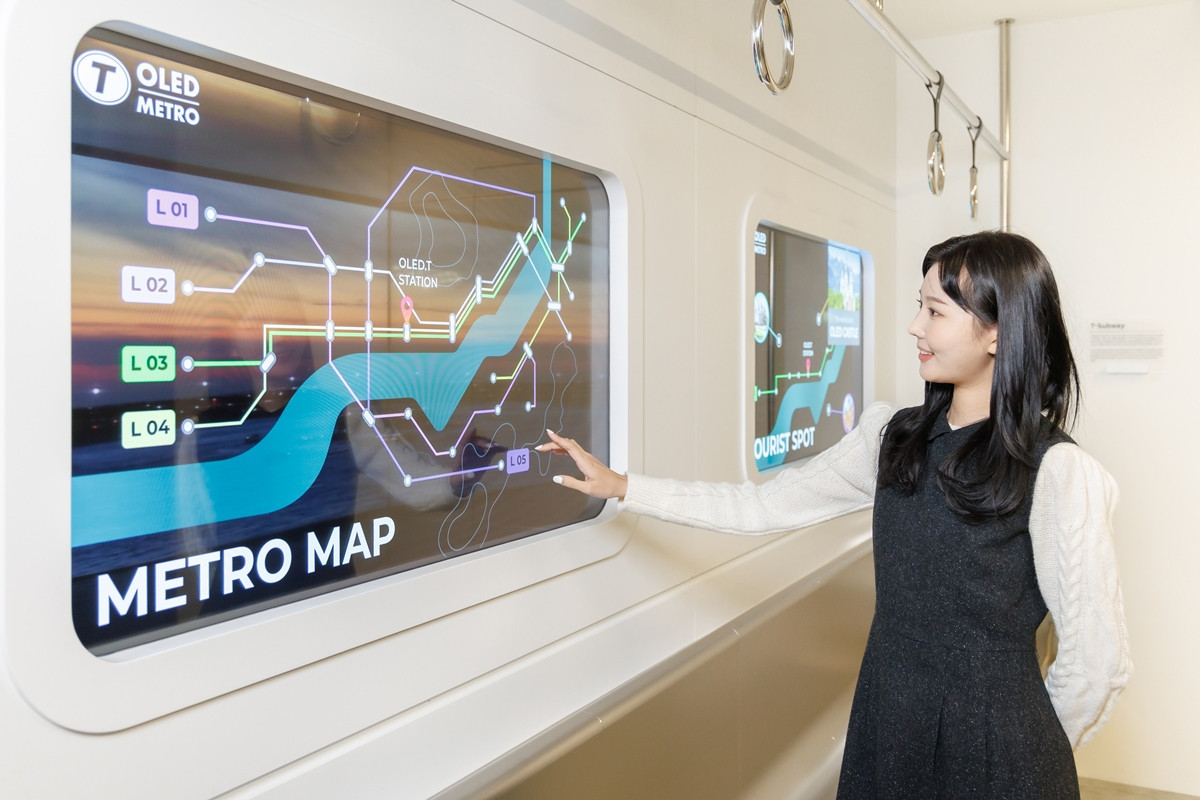
This is the first subway service in Korea to install transparent OLEDs (similar projects have already been deployed in China, Russia, and Japan). The idea is that the OLEDs create a "comfortable and smart on-board experience by displaying varied content". LGD initially installed 16 OLED displays on a single train with eight cars running on the inaugural GTX line between Suseo and Dongtan. Going forward, the GTX plans to install OLED panels in all of its trains.
Researchers at the Fraunhofer IPMS develop semi-transparent OLED microdisplays
Researchers from the Fraunhofer IPMS have developed a semi-transparent high resolution OLED microdisplay, that is significantly lighter than conventional combiner-based optical see-through near-to-eye systems. The specification of the display was not disclosed, but one can see it's a monochrome yellow panel.
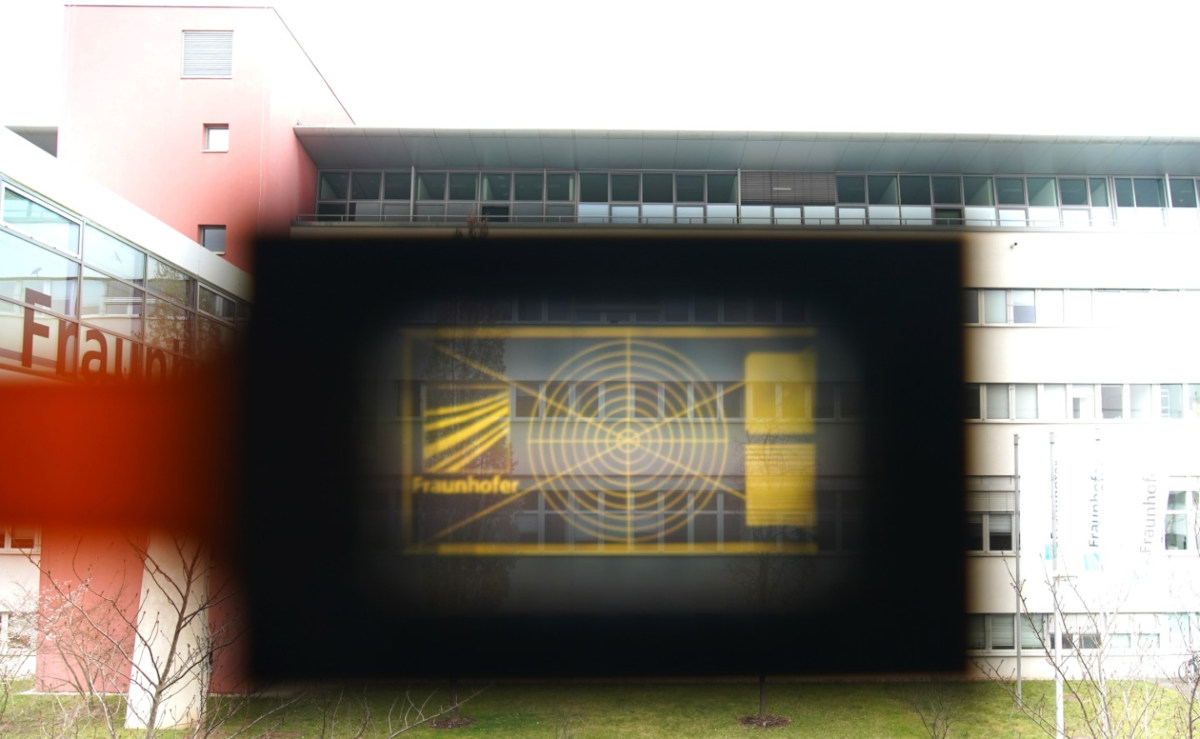
The Fraunhofer researchers developed a new semi-transparent OLED-on-silicon microdisplay technology, which enabled the new display. The technology is based on modern and advanced silicon CMOS processes, applied to silicon-on-insulator (SOI) wafers. The new wafer technology can be used to implement very thin circuitry layers. With the help of a specific IC design and an appropriate transfer-to-glass process flow, the transparent OLEDs were enabled.
CEOLED launches a smart robot with an integrated 55" transparent OLED display
China-based CEOLED launched a new interactive navigator robot, the RK-O55-LTPA, that sports a 55" transparent OLED display.
The robot is designed to create a new to engage with digital content, in public spaces. It offers a 8-hour battery life, intelligent navigation capabilities, and more.
Seoul Metro installs more transparent OLED based AI translation services throughout the city
Towards the end of 2023, Seoul's Metropolitan Government has initiated a new pilot test at Myeong-dong Station that offers an AI-powered translation service for tourists that enables them to communicate with the subway staff through a transparent 55" LG OLED display.
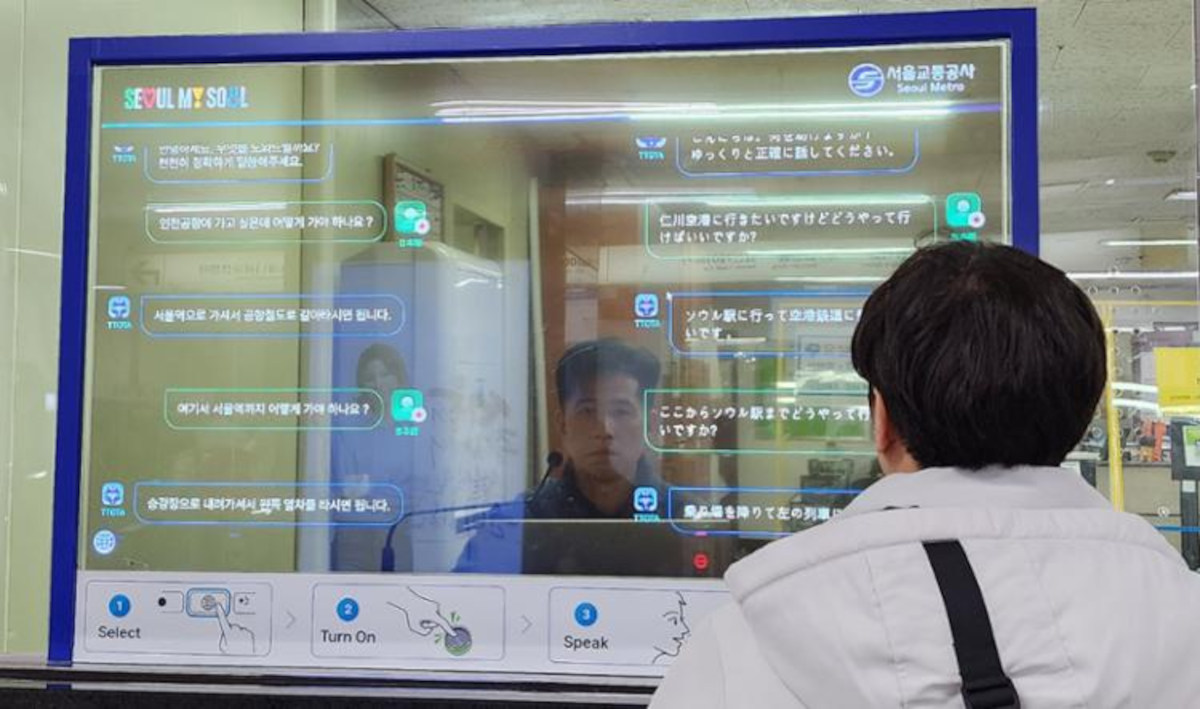
The pilot was successful, and Seoul's Metro expanded the service to 11 stations, throughout Seoul. This is one of the first useful applications of transparent OLED displays, and it is great to see it expanded in Korea. We do not know whether there are any plans to roll out more such displays in Korea.
LG Display's WOLED panels receive new low-plastic and eco-friendliness certifications from UL and SGS
LG Display says that its WOLED TV and gaming displays have been awarded UL's low-plastic verification, given to products in which the plastic usage accounts to less than 5% of their total weight.
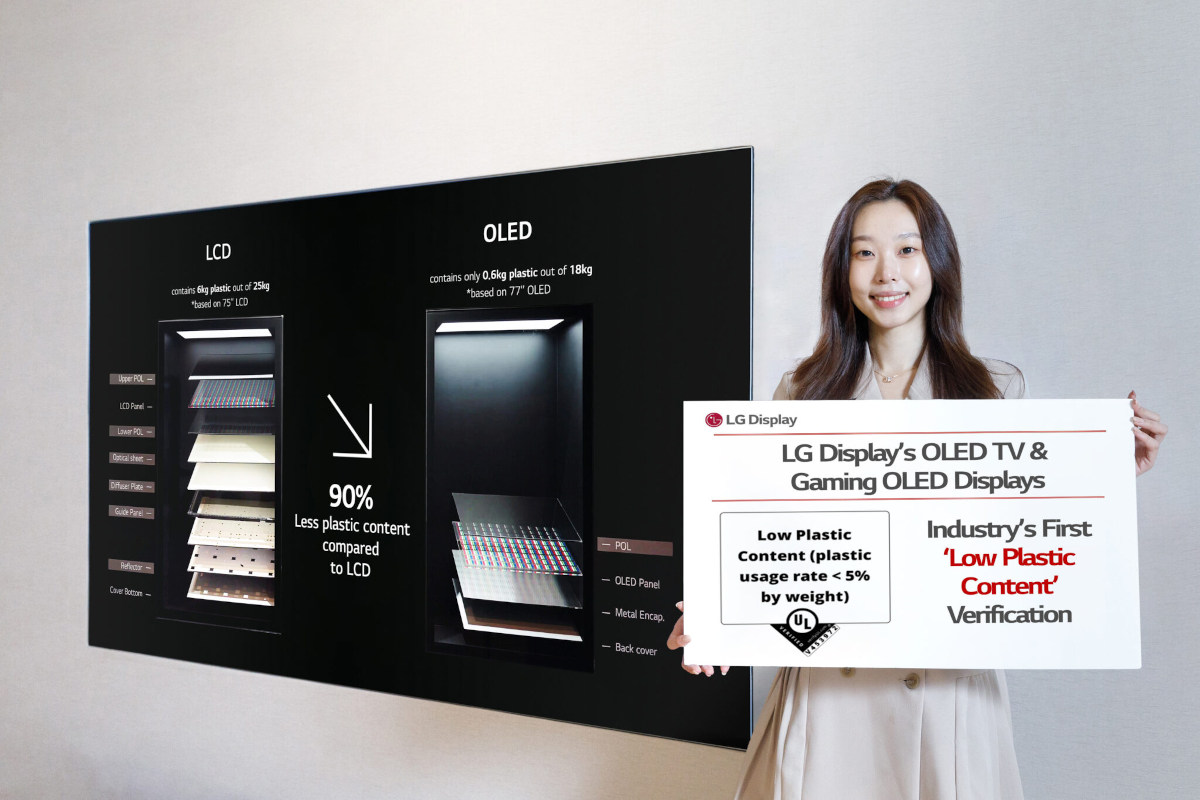
LGD says that its 65-inch OLED TV panel contains about 4% plastic content, about 905 lower than to a 65" LCD panel. In addition, by substituting key components with easily recyclable materials, LG Display has increased the recyclability of parts to as high as 92.7% at disposal.
Lian Li shows a prototype motorized gaming desk with a 30-inch transparent OLED display
Taiwan-based PC cases and accessory maker Lian Li is showing a new motorized gaming desk with a built-in 30-inch transparent OLED display.
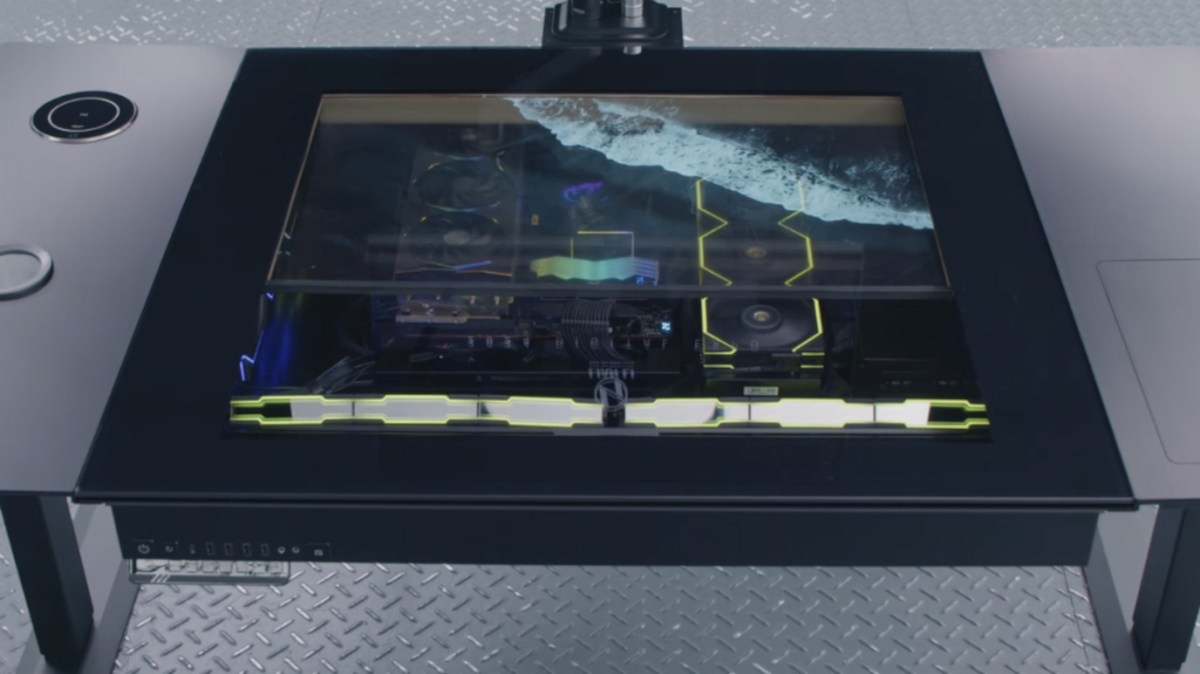
The DK-07, currently in prototype stage, adopts LG Display's1366x768 transparent WOLED display. The desk is also a PC case. It's not clear what is the use case for the transparent display - the company is saying it can be a secondary display for your computer - and it is also showing a demo in which the transparent OLED displays ocean waves to create a nice effect. The display does not cover the entire desk area, as you can see in the image above.
The OLED Marketplace now lists LG Display's and BOE's transparent OLED displays
The OLED Marketplace is now listing LGD's range of transparent OLED displays, currently in 30-inch (HD resolution) and 55-inch (FHD resolution). LG's 77" transparent OLED, which will soon enter production, will also be available soon. The displays are available with an optional touch display, can be bought as a bare panel, or a monitor, or a complete 'kiosk' solution.
In addition to LGD's displays, we also list BOE's 55" FHD transparent OLED displays. BOE's panel offers similar specifications to LGD's panels, but are lower in cost. BOE is also producing 49-inch transparent OLEDs, and these will hopefully be available at the OLED marketplace soon.
TCL CSoT showcases transparent, flexible and inkjet printed OLED displays at CES 2024
TCL CSoT demonstrated several OLED displays at CES 2024. first up we have an automotive 10.1” transparent OLED display, that offers 52% transparency. CSoT says that this is a "Smart Transparent" display, although it's not clear what is meant by that exactly.
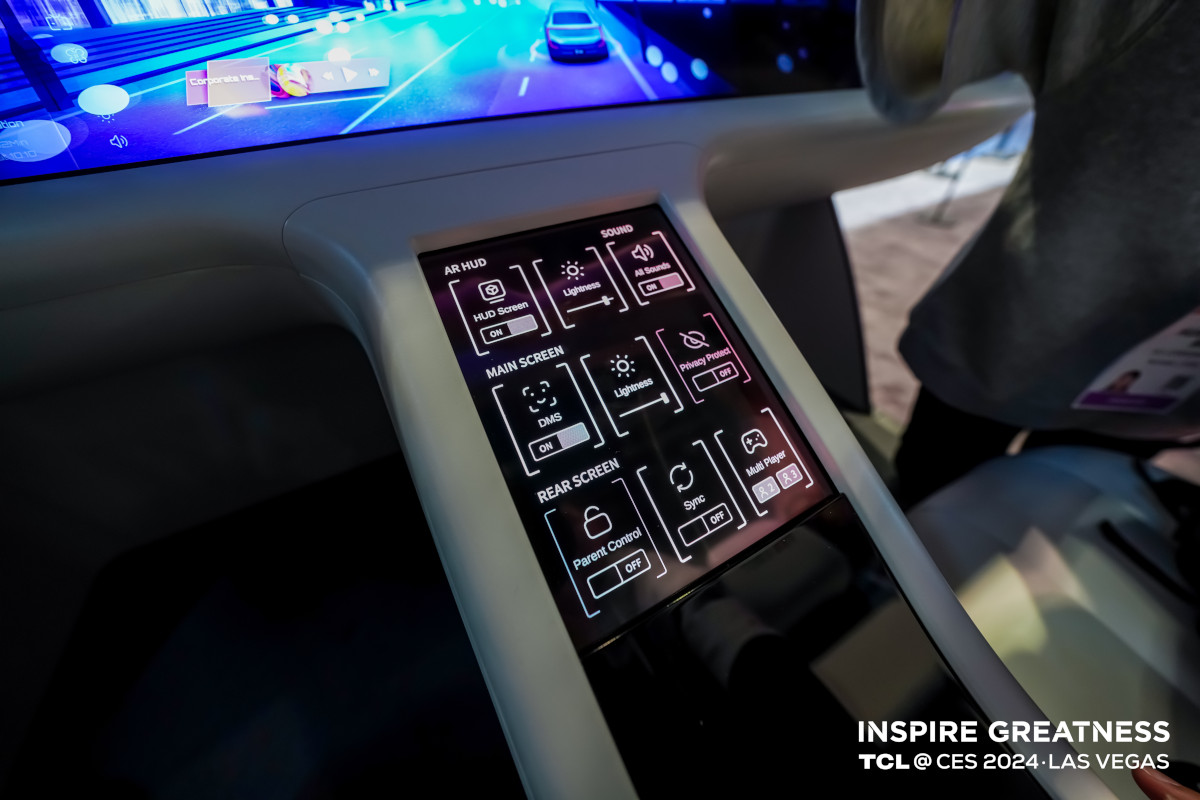
The second display is a 14" 2.8K (2880x1800, 240 PPI) inkjet printed hybrid OLED. This is the first time that CSoT has printed a laptop AMOLED display. It uses an IGZO (Oxide-TFT) backplane, and offer a variable refresh rate (30-120Hz) to expand the battery life. This display was first shown last month, when TCL stated it is on track to start mass producing OLEDs using an inkjet printing process in the second half of 2024.