Investing in OLEDs: discover OLED stocks to invest in
OLED is a display technology that enables thin, efficient, flexible and bright displays, TVs and lighting devices. OLED displays offer the world's best image quality - and enable flexible, foldable and rollable displays (see more here - What is OLED?).
The OLED market is already a multi-billion dollar market, led by Samsung, LG Display, BOE and others. It is estimated that OLED displays generated over $40 billion in revenues in 2023 and the market is expected to continue growing in the future.
OLED stocks
There are dozens of companies developing and producing OLEDs, from display makers such as Samsung, LG and BOE to smaller R&D startups and IP companies.
For public investors interested in the OLED market, there are several good options, including:
- Universal Display Corporation: UDC is an OLED pioneer, and holds many of the key patents in the industry (mostly around efficient phosphorescent OLED emitters). Virtually all AMOLED displays on the market adopt UDC's PHOLED materials, and the company experienced very fast growth in revenue in recent years. Universal Display's stock ticker is OLED, you can see the OLED share price here.
- eMagin: eMagin is an OLED microdisplay pioneer, and has been developing and producing such displays for many years, focusing on the defense market and recently also on the consumer VR/AR market. In 2023, eMagin was acquired by Samsung.
- Coherent: Coherent is a world leader in laser, pioneering the use of Excimer Laser Annealing for the production of LTPS and LTPO backplanes. The OLED industry is a major driver for Coherent's business.
- OLED display makers: There are several OLED display makers, and most of them are public companies are are held by public companies: Samsung Display (held by Samsung Electronics), LG display, Visionox, BOE and others.
- OLED equipment makers: There are several public equipment companies (for Coherent) that offer OLED production systems or components. These companies could be a good investment opportunity to investors who believes a new wave of OLED capacity expansion is near.
LG Display reports its financial results for Q3 2024
LG Display reported its financial results for the third quarter of 2024. Revenues increased 43% over last year, reaching 6.8 billion Won (almost $5 billion USD), while the net loss amounted to 337 billion Won or $244 million USD (down from 775 billion Won in Q3 2023).
LGD continues to shift its business to OLED technology, with the proportion of OLED products rising 16% in the year, reaching 58% of LGD's revenues.
Does it make sense for LG Display and Samsung Display to merge?
In this article, we examine the theoretical question of whether or not it makes sense for LG Display and Samsung Display to merge, into one company.

Note that we have no indications that such a merger is even considered by the two companies, but we feel this is a fascinating topic that should be explored, and is supported by several strong arguments.
We'll start with a short introduction to the two companies, then see why there are many reasons to pursue a merger, then explain the reasons against a possible merger, and finally detail the current financial situations of both companies.
Samsung Display and LG Display
Samsung Display Corporation (SDC) is a subsidiary of Samsung Electronics. SDC is a leader in OLED production, with a market share of over 40% in the small OLED display market (the second largest player, BOE, holds a market share of around 15%). SDC produces over 300 million AMOLED displays per year - supplying them to Apple's iPhones and tablets, Samsung Electronics Galaxy phones, and many more. The Company also produces larger-area QD-OLED panels for TVs and gaming monitors, and has a capacity of producing around a million TV panels per year. SDC no longer produces any LCDs. SDC does produce microLED displays (but on a very small scale, this is currently a strictly next-gen display technology), and the company develops OLED microdisplays (and also holds OLED microdisplay producer eMagin which it acquired in 2023 for $243 million).
LG Display officially sells its last two LCD fab in China to TCL CSoT
As we reported last month, TCL CSoT officially announced that it has agreed to buy LG Display's last LCD production line in Guangzhou, China, for $1.5 billion (10.8 billion Yuan).

TCL CSoT will acquire 80% of LG Display's 8.5-Gen LCD production line, and 100% of its LCD module line in Guangzhou. The two companies plan to complete the deal by the end of March 2025. LG's LCD production line has a capacity to produce 180,000 TV panels per month, most of these sized 55" and up (about 6% of the total LCD panel market), and had a net profit of $85 million last year over $900 million in revenues. The module factory can produce 2.3 million units per month. The two factories serve customers such as Samsung Electronics, LG Electronics, Skyworth, and more.
UDC announces support for organic electronics innovation with the new Sherwin I. Seligsohn Innovation Award
Universal Display Corporation announced the establishment of a new award, the Sherwin I. Seligsohn Innovation Award in honor of UDC’s late founder. Through this award competition, UDC seeks to support and celebrate organic electronics innovation.

The aware amount is $75,000 and researchers can now submit their research (submissions will be accepted until June 302025). The award is open to individuals and teams from around the world, and is also open for both academic and non-academic groups that are pushing organic electronics innovation in new and exciting ways. The theme of the 2025 award is organic photovoltaics or solar (OPVs).
BOE, Tianma, TCL CSoT, EDO and Visionox all post improved quarterly earnings
Recently, BOE, Tianma, TCL, EDO and Visionox all posted their financial results for Q2 2024, and all were rather positive. Samsung Display and LG Display also posted increased earnings for the quarter.
So we start with BOE, that posted revenues of 93.4 billion yuan (13.17 billion USD) for the first half of 2024, an increase of 16.47% over H1 2023. Its net profit increased 210% compared to last year (2.285 billion Yuan, or $320 million USD). BOE enjoyed increased LCD sales and optimized production, and also noted high demand for high-end foldable OLED displays.
Visionox shares more details on its upcoming 8.6-Gen IT AMOLED line in Hefei, construction will begin towards the end of 2024
In May 2024, Visionox announced its plan to build a new AMOLED production line, targeting the IT display market - laptops, monitors and tablets. The company said that it will best 55 billion Yuan (around $7.6 billion USD) to build a 8.6-Gen production line in Hefei, Anhui province, with a monthly capacity of 32,000 substrates.
Yesterday Visionox shared some more details about its project and plans. The company will build the new fab with support from two local government-owned firms, both of which are partners at Visionox's existing 6-Gen AMOLED line in Hefei. In the first step for this new project, the three partners (Visionox and the new government firms) will invest a total of $282 million USD. Visionox will only hold 20% of the JV.
Coherent received the first volume order for a 8-Gen OLED laser annealing system
Photonics-based solutions provider Coherent announced their financial results for Q2 2024, with revenues of $1.3 billion, a 9.1% increase over 2023. The rise in revenues is mostly thanks for strong demand for the company's AI-related datacom transceiver business.

As part of the quarter results announcements, Coherent also announced that it received its first volume order for its new linebeam annealing systems for 8-Gen AMOLED fabs, used to produce IT displays for tablets, laptops and monitors.
Universal Display reported its financial results for Q2 2024, saying its blue PHOLED project takes longer than expected
Universal Display Corporation reported its financial results for Q2 2024, with revenues of $159 million (up 8% from Q2 2023 and a net income of $52 million (up from $50 million in Q2 2023). The company ended the quarter with $879 million in cash and equivalents.
 UDC says it believes the OLED market's trajectory is robust, and it is raising the lower end of its annual guidance, now saying that its revenues will be in the range of $645 million to $675 million.
Samsung Display reports increased demand for mobile AMOLEDs and gaming monitors in Q2 2024
Samsung Display posted its financial results for Q2 2024, with $5.5 billion in sales and $730 million in operating profit. The company says that its mobile AMOLED unit have seen sales growth, driven by solid demand for flagship products, along with effectively supporting new smartphone launches from key customers (i.e. mostly Apple).
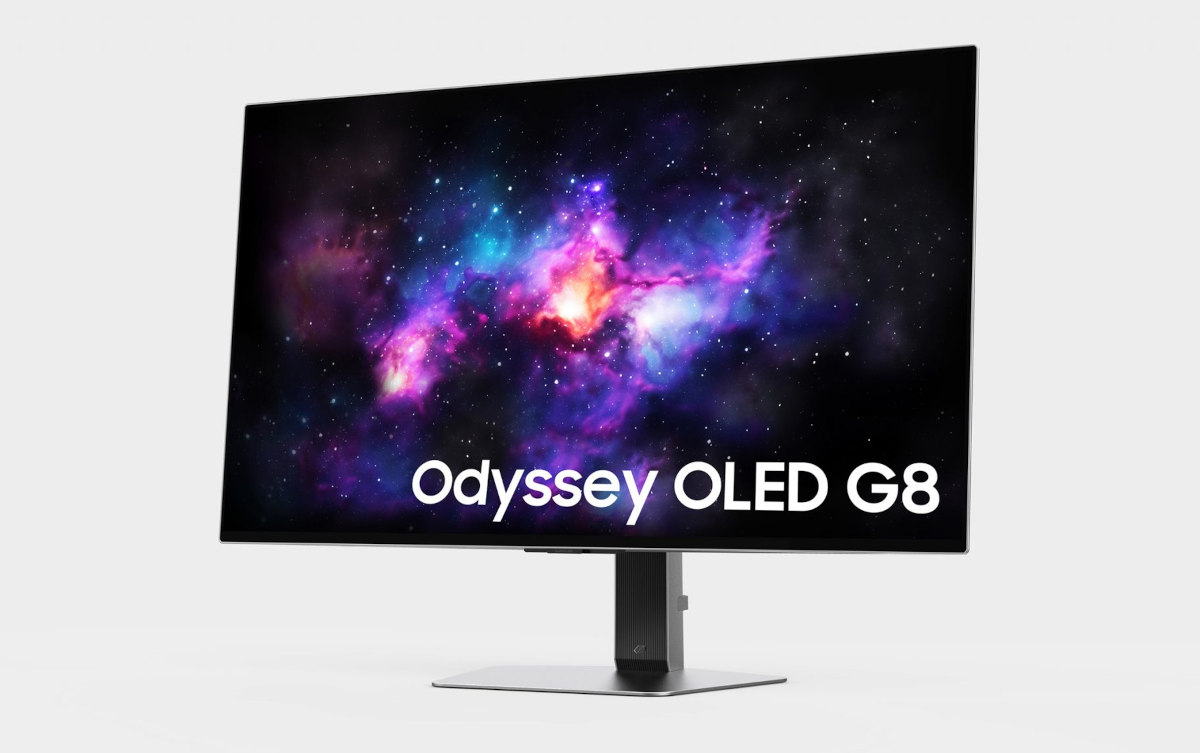
SDC also saw increased sales of both IT OLEDs (mostly tablets and laptops), and gaming monitor panels. The company reported stable sales of QD-OLED TV panels.
Everdisplay starts installing equipment in its $825 million AMOLED module factory in Yangzhou
A few days ago, Everdisplay Optronics started to move-in equipment in its AMOLED module factory in Yangzhou High-tech Industrial Development Zone, in Jiangsu province.

Everdisplay estimates that the total investment in its new module factory will reach $825 million USD, and it will have an annual capacity of 70 million display modules - when its two lines are in operation. The construction of the factory started in December 2023.

