OLED Smartphones - introduction and industry news
What is an OLED display?
An OLED display uses a new technology called OLED (Organic Light Emitting Diodes). OLED screens are brighter, more efficient, thinner and feature better refresh rates and contrast than LCD or Plasma.
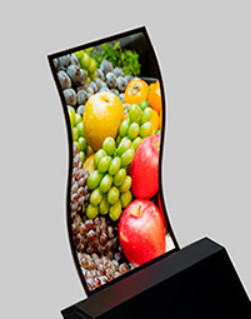
OLEDs are made by placing thin films of organic (carbon based) materials between two conductors. When an electrical current is applied, a bright light is emitted. Since the OLED materials emit light, a backlight is not required (unlike LCDs).
OLEDs in mobile phones
Mobile phones that boast OLED screens are rapidly becoming more prevalent, with over 500 million AMOLED screens annually - mostly to satisfy demand from mobile phones. Samsung has been using AMOLEDs in its high-end phones for many years, and most phone makers are also adopting OLED displays (including Apple, LG, Xiaomi, Huawei, Oppo, Vivo, Lenovo, Motorola, and others).
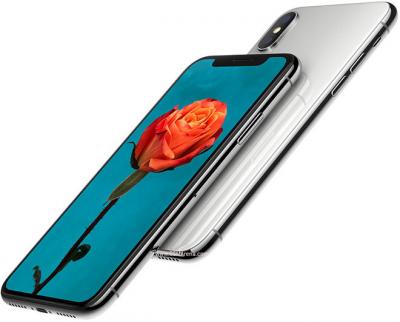
OLED displays are advancing quickly, and today smartphone AMOLED displays outperform LCDs in all parameters - except the price which is still at a premium.
For a complete list of smartphones and mobile phones with OLED displays, click here.
Further reading
BOE launches its Q10 AMOLED display, receives DisplayMate's highest ever rating
BOE launched a new flexible AMOLED display, branded as Q10 AMOLED, that has a new OLED stack and delivers increased performance - the company said that compared to its previous flagship OLED stack, it enhances the peak brightness by 12.5%, the lifetime by 33%, and it reduces the power consumption by 10%. The company also says the color saturation and response time is increased.

The new Q10 display will debut at three smartphones, the OnePlus 13, OPPO Find X8 and Vivo iQOO 13. That specific screen is a 6.8" 3168x1440 (510 PPI) 120Hz LTPO AMOLED. DisplayMate tested the new display, and says it is the world's highest performing mobile display ever, seting or matching 21 performance records. It is the first display to receive DisplayMate's A++ rating.


Rain Technology launches its switchable OLED display privacy solution
Rain Technology announced a new technology, called OLED Switchable Privacy, that is designed to protect OLED displays. Rain Technology says that its privacy technology already shipped in millions of LCD laptops and other displays, and is now ready for OLED displays for the first time.
OLED Switchable Privacy is embedded in the display panel smartphones, tablets or laptops, directing and controlling light from the display, thus allowing enterprises, consumers and application developers to hone unprecedented levels of automated visual security.
DSCC expects Apple's first month iPhone 16 panel shipments to be 8% higher than those of the iPhone 15
DSCC says that shipments of Apple's iPhone 16 series were 8% higher in the first month compared to the shipments of Apple''s iPhone 15 series last year. As Apple continues to target emerging markets, DSCC expects Apple to increase sales of entry level and older iPhones, including the iPhone 13, 14, and 15 series.

Interestingly, a couple of weeks ago we reported that according to Apple analyst Ming-Chi Kuo the first-week demand for Apple's new iPhones is lower than expected, with total demand of only 37 million units - lower by 13% compared to the demand for the iPhone 15 a year ago. It remains to be seen whether demand picked up later in September.
Reports suggest Samsung is accelerating its rollable smartphone project, aiming to launch it in 2025
According to a report from Korea, Samsung is progressing with its rollable OLED development project, and the company aims to launch its first rollable smartphone in 2025. When fully opened, the phone will sport a very large 12.4" display. Interestingly, Samsung apparently will implement an under-the-display camera solution.
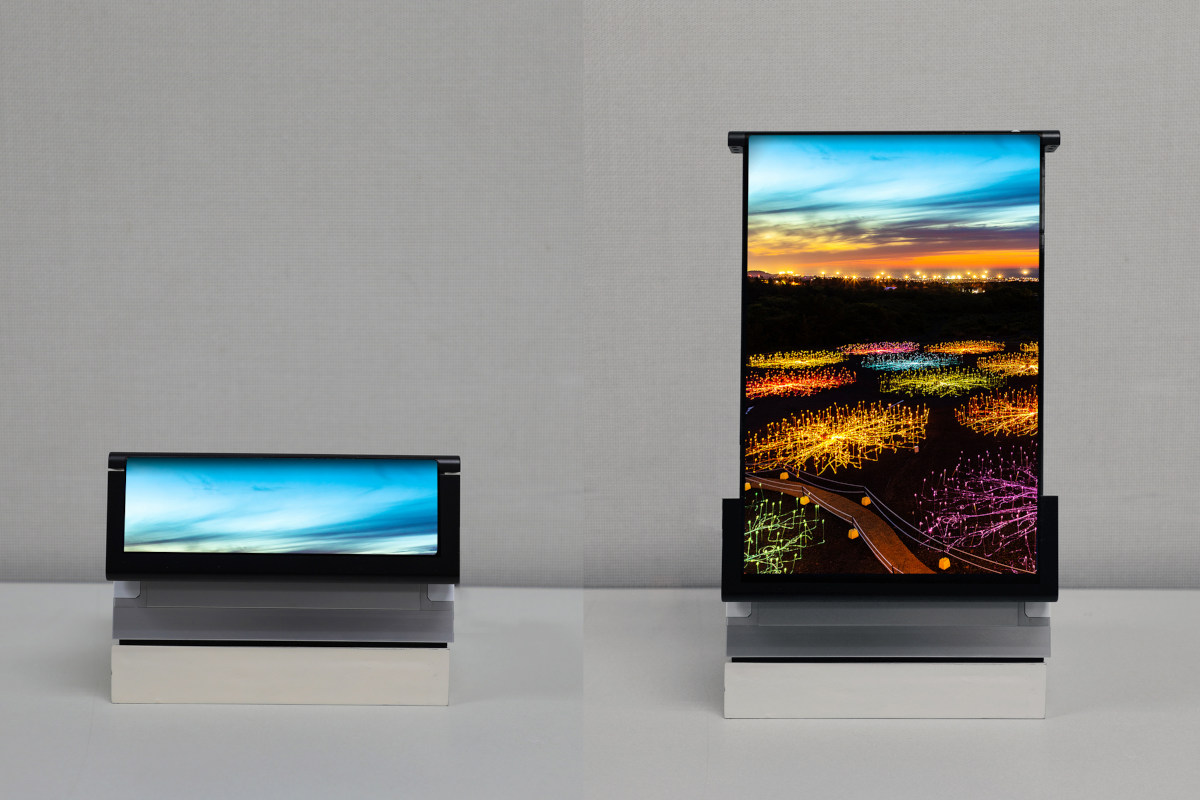
Samsung's acceleration of its rollable phone project is seen as the Korean device maker's response to Huawei's tri-folding smartphone, the Mate XT. It is seen that this was an embarrassment for Samsung, that recently also to witness LG Display's leading over it with tandem OLED production. It will remain to be seen whether Samsung's acceleration will lead to problems in quality and reliability - which happened when it launched the world's first foldable phone back in 2019.
Ming-Chi Kuo says first week demand for Apple's iPhone 16 series is lower by 13% compared to the iPhone 15
A few days ago Apple announced its 2024 iPhone 16 series, with all four models (iPhone 16, 16 Plus, 16 Pro and 16 Pro max) based on OLED displays. According to Apple analyst Ming-Chi Kuo the first-week demand for Apple's new iPhones is lower than expected, with total demand of only 37 million units - lower by 13% compared to the demand for the iPhone 15 a year ago.

According to Ming-Chi Kuo, who's considered very reliable, the demand for the lower-end models is actually higher than last year - by 10% for the iPhone 16 and 48% for the 16 Plus. But this is not enough to offset the drop in demand for the higher-end modes: 27% less demand for the iPhone 16 Pro and 16% for the 16 Pro Max.
Apple announces its 2024 iPhone 16 series, and the new Apple Watch Series 10, all with AMOLED displays
Yesterday Apple announced its 2024 iPhone 16 series, and its latest smartwatch devices - all based on OLED displays. We'll start with the the iPhone 16 that offers a 6.1" 2,000 nits (HBM) 1179x2556 Super Retina XDR LTPS AMOLED, while the iPhone 16 Plus offers a larger 6.7" 1290x2796 display. Both phones are based on Apple's latest 3nm A18 chipset offering improved performance and AI support.

The iPhone 16 Pro has a more advanced 6.3" 120Hz 2,000 nits (HBM) 1206x2622 LTPO Super Retina XDR OLED. The 16 Pro Max offers a larger 6.9" 1320x2868 AMOLED. These new phones are based on Apple's 3 nm A18 Pro chip, offer a "huge leap in battery life", support Apple Intelligence and feature new a main camera.
Huawei officially launches its Mate XT tri-folding OLED smartphone
Huawei officially announces the world's first tri-folding OLED smartphone, the Mate XT. The phone and its specifications will be unveiled on September 10, and will ship on September 20.

Huawei allows people to reserve their Mate XT phone, and already over 1.25 million people reserved it.
Reports say Apple to adopt an OLED display 2025 iPhone SE 4, start to order panels from LG Display and BOE
According to reports from Japan, Apple decided to adopt a 6.1" AMOLED display for its upcoming iPhone SE 4 smartphone, which will mean that all of the company's smartphone products will be based on OLED displays.

We actually reported this in March 2024, and back then it was suggested that Apple's target price was $25 for the OLED display - which was too low for Samsung Display that decided not to continue with its discussions with Apple. Back then it was estimate that BOE will supply the majority of the displays, and some orders will go to Tianma. According to the new report, the second supplier is actually LG Display.
Omdia forecasts fast growth in the adoption of COE technology for smartphone AMOLEDs, mainly foldable ones
Omdia says that Color-Filter on Encapsulation (COE) will grow to be the dominant technology in foldable OLED smartphone panels, and will replace the currently-used circular polarizers. COE adoption will grow at a 33% CAGR between 2024-2030, and by 2030 almost 90% of foldable smartphones will use COE technology, and almost 20% of all smartphone OLED panels.

The adoption of COE in OLEDs increases the panel effective brightness, which means that the display consumes less power compared to a polarizer OLED (same brightness) and also lasts longer. The color gamut is also improved. On the other hand, COE OLEDs suffer from higher reflectivity compared to polarizer OLEDs.
Tecno shows a tri-folding AMOLED smartphone concept
China-based smartphone maker Tecno has unveiled a new concept device, called the Phantom Ultimate 2, that sports a tri-folding OLED display.
The device is actually a working prototype, that when fully opened has a 10-inch 1620x2880 LTPO AMOLED display. When fully closed, the display is 6.48" in size. The company says it has developed a unique hinge design that enables the whole phone to be only 11 mm thick when fully closed. Tecno tested the device and the hinge and it lasts for over 300,000 folding cycles.

