Direct emission

Samsung Display demonstrates a 40,000 direct-emission OLED microdisplay

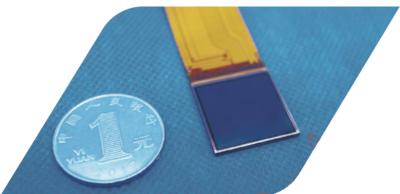
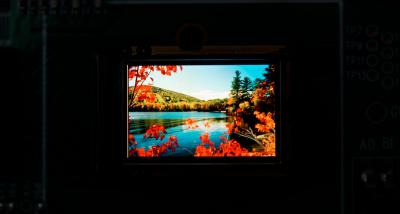
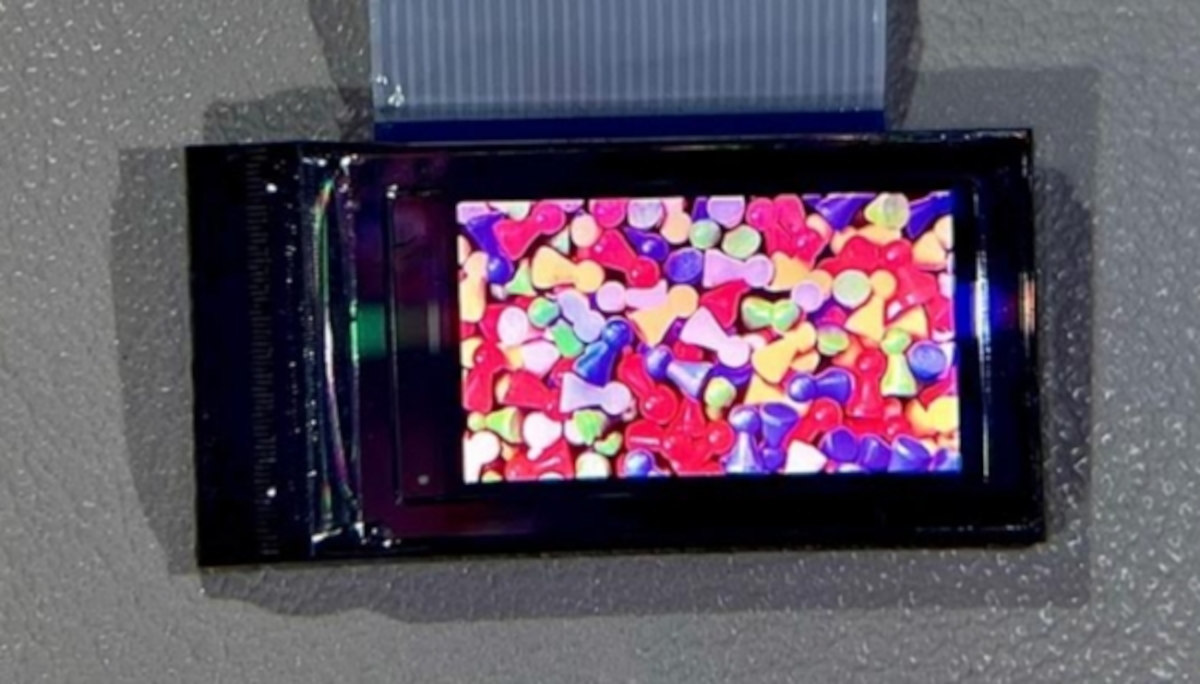
Samsung Display is showing its latest OLED microdisplays at AWE USA 2026, including a 40,000 nits 1.3" direct-emission OLED microdisplay, that the company refers to as RGB OLEDoS. This it the brightest OLED microdisplay demonstrated by SDC to date, and one of the brightest OLEDs ever developed (second only to INT Tech's displays).

SDC's previous highest-brightness OLED microdisplay prototype achieved 20,000 nits back in May 2025, so it is great to see the company doubling the brightness in one year. We do not know how close Samsung is to actually producing such high-brightness OLED microdisplays, but just yesterday we reported that the company is planning to build an RGB OLEDoS production line, that should achieve mass production in 2028.

Read the full story Posted: Jun 17,2026

Samsung Display plans to build a direct-emission OLED microdisplay fab, is talking to deposition equipment makers

In November 2025, we reported that Samsung Display has finally started to produce OLED microdisplays, and Samsung Electronics will add SDC as its second microdisplay supplier for the Galaxy XR.

SDC's current OLED capacity is rather limited, and it produces WOLED-CF microdisplays. It is now reported that SDC is starting to look into direct-emission OLED microdisplay production, and has initiated talks with equipment suppliers. The displays will also support a multi-stack (tandem) architecture. Samsung is aiming to target the high-end market segment.

Read the full story Posted: Jun 15,2026

O-Vision (Aoshi) Technology raises its Series-B funding round as it plans to scale up its photolithography-based OLED microdisplay production

Guangzhou O-vision (Aoshi) Technology has successfully concluded its Series-B funding round, raising over 100 million RMB (about $14.7 million USD). The company plans to use the funds mostly towards the construction of its 12-inch K2 OLED microdisplay fab.

O-Vision organic photolithographic patterning technology process image

O-Vision organic photolithographic patterning technology process

Aoshi has previously concluded its seed and Series-A funding round, which together raised over 150 million Yuan (over $22 million USD). 

Read the full story Posted: May 24,2026

INT Tech developed a 100,000 nits full-color native RGB OLED microdisplay

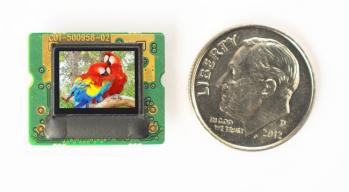
Taiwan-based OLED microdisplay developer INT-Tech announced that it has developed a native RGB (direct-emission) OLED microdisplay, that achieves up to 100,000 nits of brightness, breaking its own record of a 60,000 nits microdisplay unveiled in April 2025.

INT Tech says that beyond this record-setting brightness (which is around 10X brighter compared to any commercial OLED microdisplay today), the new display offers excellent white balance, color gamut and power efficiency. We detail the technology and display specification below. 

Read the full story Posted: Dec 23,2025

Samsung Display demonstrates new OLED and QD-EL displays at Displayweek 2025

Samsung Display is showing several new displays and technologies at Displayweek 2025. First up we have Samsung's latest Sensor OLED display protype that allows for allows fingerprint recognition and cardiovascular health monitoring across the entire screen surface. 

To create this display, SDC integrated OPD directly during the OLED deposition process, embedding the sensors into the panel itself (what is sometimes referred to as a bi-directional OLED). Beyond fingerprints, it measures biometric data such as heart rate, blood pressure and stress levels. This technology is based on how OLED light reflects differently depending on the contraction and relaxation of blood vessels.

Read the full story Posted: May 13,2025

INT-Tech Unveils Industry Leading 60,000 nits Full-Color Native RGB OLED Micro Display, Targeting Higher Brightness Ahead

INT-Tech, a leading innovator in display technology, recently demonstrated a RGB OLED micro display with unprecedented brightness of 60,000 nits. This is a 5-fold increase from its previously announced brightness of 12,000 nits in 2022 and a significant leap forward from the current industrial level of about 10,000nits.

Most OLED micro displays currently used in XR devices are white OLEDs with color filters, often enhanced with a tandem OLED structure and micro-lens array (MLA) to boost brightness. INT adopted a completely different approach in the beginning and dedicated to developing RGB direct emission micro displays. The technology is named uNEEDXR, which stands for ultra-high pixel density for Near Eye Display for XR. By eliminating color filter, and continuous optimization in panel design and manufacturing process, INT successfully pushed the display to the unparalleled brightness level. The 60,000 nits display lighted on recently features a single junction OLED structure without an MLA, and is produced on a mass production line.

XR devices have extremely high requirement for display brightness because brightness is greatly diminished by the optical system. When paired with collimated lens, display at 60,000 nits has an output of 1 lumen, and the brightness reaching eyes through diffractive waveguide is about 900 nits assuming a Field of View (FOV) of 30°. XR device makers believe the desired brightness reaching eyes should be 1500 nits or higher for outdoor applications, which requires approximately 100,000 nits from the display. Looking ahead, INT is ambitiously targeting a brightness milestone of higher than 100,000 nits, aiming to push the boundaries of display performance even further.

Read the full story Posted: Apr 01,2025

Apple reportedly reaches out to Samsung and LG regarding the supply of OLED microdisplays

According to a report from Korea, Apple has sent an RFI for both Samsung Display and LG Display, seeking more information about the two companies capabilities regarding the production of OLED microdisplays. It is speculated that Apple is seeking to change its OLED supplier in a future, lower-cost VR headset.

Apple Vision Pro

Apple specifically mentions a white OLED with color filters architectures (i.e. not a direct-patterned device), a panel size of 2 to 2.1 inch and a display density of around 1,700 PPI (which is rather low, Sony's 4K microdisplays used in the Apple Vision Pro for example offer a density of almost 3,400 PPI).

Read the full story Posted: Jun 29,2024