OLED laptop

Samsung Display developed a 20% thinner gaming laptop AMOLED display

Samsung Display is showcasing a new laptop OLED panel, that is 20% thinner compared to Samsung's currently produced laptop AMOLEDs.

The company says it has achieved this slimmer design by etching both the Thin Film Transistor (TFT) substrate glass and the encapsulation glass to reduce their thickness by more than 30%, while also using its proprietary process know-how to resolve the potential warping that can occur when panels become thinner. 

Read the full story Posted: Jun 01,2026

Samsung reaches commercial-level 90% yields at its A6 8.6-Gen line, on track to begin full scale production in June 2026

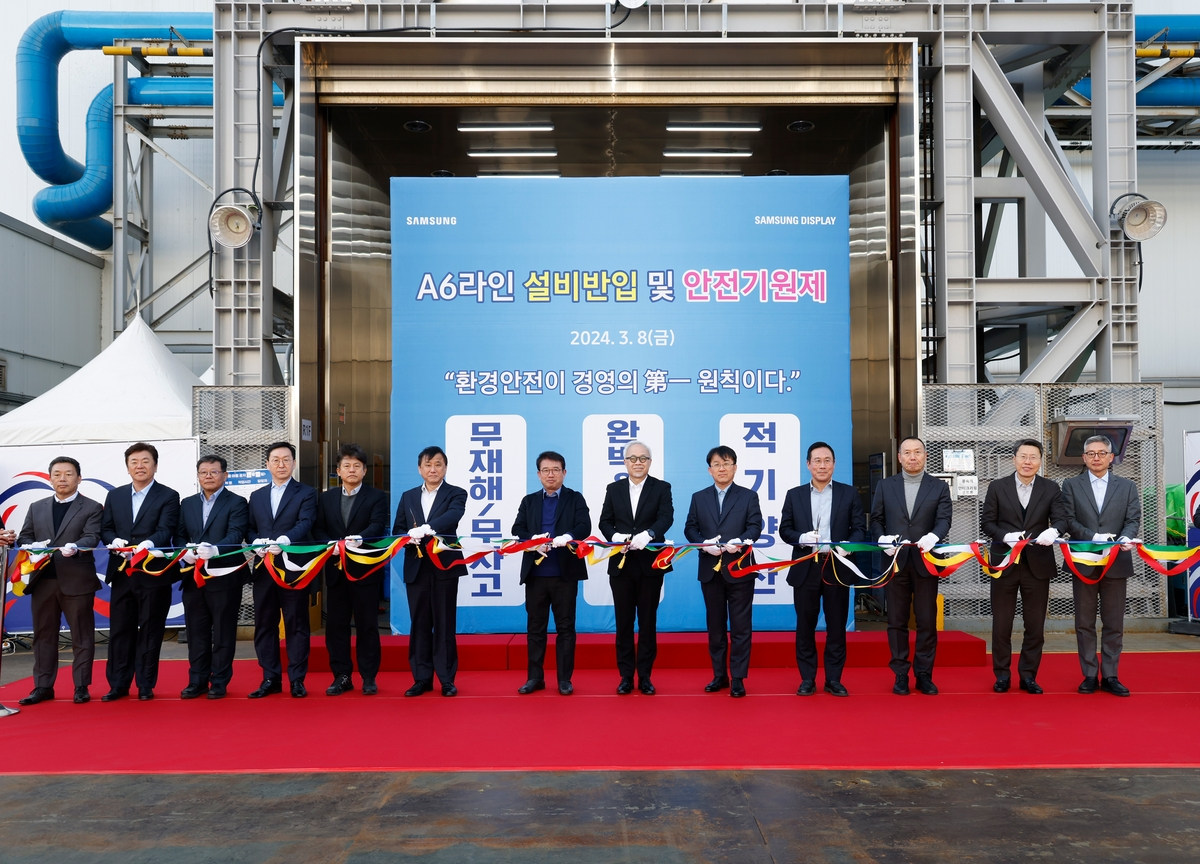
According to the latest industry news, Samsung Display has managed to increase its A6 8.6-Gen IT OLED line yields to over 90%, with parts of the process achieving yields of over 95%. These are commercial-level yields, and Samsung is ramping up production at the new fab, and will begin full-scale production next month.

A couple of months ago we reported that Samsung Display may be delaying the A6 ramp up, following some technical challenges - and demand concerns. But it appears as if this is not the case, and Samsung is actually right on schedule. 

Read the full story Posted: May 22,2026

OLED under macro-pressure: memory prices, geopolitics and LCD challenges

Towards the end of 2025, we believed that 2026 will be another year of increased AMOLED panel shipments, even without taking into account the two new 8.6-Gen IT OLED Lines that are expected to begin production. But as 2026 started, everyone started to realize that macro constraints are starting to shape OLED panel demand, and the AMOLED market started to contract.

The clearest example is memory. DRAM and NAND prices are both rising sharply, due to AI datacenters demand. This increased the cost of smartphone production, which led to a lower demand - some analysts estimate that smartphone shipments will fall around 10-14% in 2026. The main problem lies in low cost smartphones that already suffer from low margins. For OLED makers, the problem is even worse - as some brands are switching to lower cost LCDs in their budget and mid-range smartphones.

In this article we examine the three new macro constraints that are shaping the OLED industry in 2026, why this matters now more than it did in previous cycles, what we learned from the post-COVID IC shortage, the return of LCDs, which OLED segments are more resilient, and deeper implications for the next chapter in the OLED industry's growth story.

Read the full story Posted: May 20,2026

BOE to start mass producing 14-inch laptop OLED panels at its 8.6-Gen OLED line in Chengdu by the end of the month

BOE is accelerating its B16 8.6-Gen IT AMOLED fab in Chengdu, and according to the latest updates from Korea, the company will begin mass production by the end of this month (May 2026).

BOE's first products out of this new line will be 14-inch laptop OLED panels, and it will supply the first batch to ASUS and Acer (this was already reported last year). It is likely that BOE will take time to fully ramp up the new production line, but the first commercial production is an important step.  BOE originally planned to begin production towards the end of 2026, but it has managed to accelerate and begin production sooner.

Read the full story Posted: May 14,2026

Omdia: Inkjet printing carries many important advantages for OLED production, will be 30-35% cheaper than FMM for laptop panel production

Omdia estimates that producing a laptop OLED panel using inkjet printing is about 30-35% lower in cost compared to traditional FMM production. Both technologies are expected to slowly reduce production costs, but the gap will remain rather constant, at least in the next 3 years.

Inkjet printing, according to Omdia, provides many advantages over conventional technologies. - advantages in red, green, and blue (RGB) subpixel patterning, greater material utilization, flexibility, panelization, and larger pixel apertures. At the same time, equipment and maintenance costs are lower than those required by FMM processes. All of this translates to lower production costs.

Read the full story Posted: May 07,2026

LG Display shows a wide range of new OLED displays and technologies at SID Displayweek 2026

LG Display is showcasing a wide range of OLED displays and prototypes at SID Displayweek 2026. In this article we detail the most interesting demonstrations and technologies.

LG Display 3rd-Gen Tandem OLED testing

First up, is LG's 3rd-Gen Tandem OLED, these are AMOLED displays, aimed towards the automotive market. LG says that it has introduced two new technologies into its tandem stack - a deep-blue dopant and optimized hole and electron movement. It isn't clear exactly what LG refers to, but it does say that these new technologies enable tandem OLEDs with improved power consumption (18%), brightness (1,200 nits), lifetime (over 15,000 hours) and color purity and reproduction. 

Read the full story Posted: May 05,2026

Counterpoint: the OLED market to remain flat in 2026, as smartphone panel shipments will decline 3% due to high memory prices

Market research firm Counterpoint says that following the spike in memory prices, it revised down its forecast for the OLED industry in 2026, as it now sees smartphone OLED panel shipments declining 3% in 2026. We have heard this before from Omdia a couple of months ago.

Following a 3% increase in global OLED panel shipments in 2025, Coiunterpoint says that the market will remain flat in 2026, as automotive and IT OLED shipments will increase and offset the decline lin smartphone OLEDs. 

Read the full story Posted: Apr 15,2026

LG Display advances with its plans to adopt eLEAP for IT OLED production, will make a final decision by end of 2026

Last year, we reported that LG Display is looking into adopting Japan Display's eLEAP technology at its OLED TV production lines in Paju, perhaps seeking to produce RGB AMOLED displays for IT applications at these fabs that are currently under utilized.

JDI eLEAP aperture ratio image

Today we hear that LG Display is now progressing with this plan, and is checking an investment plan to apply eLEAP into its large-area OLED production lines. 

Read the full story Posted: Apr 14,2026

Counterpoint: OLED laptop shipments to grow 33% in 2026 and gain market share over miniLEDs

Counterpoint says that laptop display shipments grew 7% in 2025, and the advanced (OLED and miniLED) laptop segment grew 19%, driven by expanded adoption of AI PCs, upgrades at enterprises - and demand pull-forward ahead of memory cost inflation.

For next year, the company forecasts that the overall market will decline 5%, mainly due to the increase in memory prices. OLED and miniLED shipments will together decline by 1% - but in fact OLED shipments will increase sharply - by 33%, while miniLEDs will fall 43%.

Read the full story Posted: Apr 09,2026

Samsung Display reportedly achieve 80% yields at its A6 8.6-Gen production line, on track for mass production in June

A few weeks ago we reported that Samsung Display may be delaying the A6 8.6-Gen ramp up, following some technical challenges - and demand concerns. Today it is reported that say that this it not the case - SDC actually managed to achieve yields of over 80%, and is on track to start full mass production by June 2026. 

According to what we know, the first products out of the new line will be laptop AMOLED panels that will go to Apple - that signed an exclusive supply agreement with Samsung Display to produce touch AMOLED displays for its upcoming 2026 MacBook Pro laptops (both 14-inch and 16-inch models). 

Read the full story Posted: Apr 09,2026