 Kateeva was established in 2008 at MIT with an aim to pioneer OLED ink-jet deposition processes.
The company developed innovative inkjet printing equipment, branded as YIELDJet printers. Kateeva started to offer ink-jet based encapsulation systems in 2014, used to protect flexible OLED panels. Kateeva's encapsulation performance is excellent and it was already reported that these systems are used in flexible OLED mass production - and some years ago Kateeva claimed that it takes a "commanding lead" in the OLED organic thin-film encapsulation (TEF) market.
In 2017 Kateeva formally introduced its inkjet equipment for large-area RGB OLED emitter deposition. Kateeva brands its new line as YIELDJet Explore and these systems are currently targeted for R&D lines and pilot lines.
Kateeva is also developing printers that can deposit quantum dot materials, and the company hoped that its equipment would be used by Samsung to deposit QDs for its QD-OLED TVs. Eventually that did not happen which caused financial problems at Kateeva, which it is now finally getting out of.
7015 Gateway Boulevard
Newark, CA 94560
United States
A Conversation with Kateeva CEO, Bin Liu
Display Week 2024 was a busy and exciting event for Kateeva. CEO Bin Liu was on site at our US HQ in Newark, California. At the SID show in San Jose, he met with customers to get a flavor of the latest display technology innovations that will inform our product roadmap.

Bin Liu, CEO, Kateeva
One of the highlights at SID week was a celebration of Kateeva’s CTO Emeritus, Steve Van Slyke. Steve and Ching Wan Tang received the Karl Ferdinand Braun Award for their co-invention of the OLED device. The accolade is the highest honor conferred by the Society for Information Display. It recognizes “outstanding technical achievement in, or contribution to, the display industry”.
Since becoming CEO in late 2022, Bin and the leadership team have implemented a new vision for Kateeva. He will share the details in a keynote talk at Display Innovation China in Shanghai, this week (July 3-5).
Reports suggest Kateeva's printers failed Samsung's QD printing tests, will not be used for QD-OLED production
According to reports, Kateeva's QD-OLED printing project saga is not over. Samsung Display tested the company's latest printers, but these failed the tests and Samsung Display will not but these printers. SDC planned to replace the currently-used Semes' printers, which also suffer from low performance.
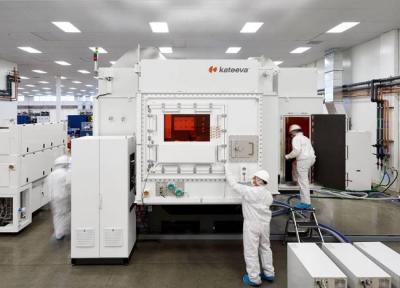
Samsung Display is also not committed yet to expand its QD-OLED production lines, which means that in any case it does not need to buy new printers for production expansion. Earlier reports suggested that SDC wanted to upgrade it current capability for higher density (to reach 8K TV printing), so this may be the reason behind the testing of Kateeva's new printers.
Kateeva starts to ship 8K QD deposition systems to Samsung Display
According to reports, Kateeva started to ship quantum dots inkjet printing equipment to Samsung Display, for the production of QD-OLED panels. It appears as if Samsung is interested in producing 8K QD-OLEDs, and its current inkjet printing supplier, Semes, is not ready with printers that support 8K QD deposition.
Kateeva announced that it has designed a new system, called the YIELDjet Jarvis, that supports 8.5-Gen substrates and can indeed enable 8K TV deposition. Kateeva says that the Jarvis system has the ability to print using solvent-based RGB inks or nanoparticle inks with its proprietary ink recirculation system to ensure uniform particle distribution.
Kateeva did not yet receive any QD-OLED inkjet printers orders from SDC, and may lose its patent portfolio to its latest investor
In 2020 Kateeva lost Samsung's QD-OLED inkjet printing inkjet printing contact to Korea's Semes, which resulted in massive layoffs including some of Kateeva's executives.

In January 2022 it was reported that Samsung has decided to change course, and rely on Kateeva's inkjet printers in its 2nd QD-OLED production line, as the Semes printers do not perform as well as Samsung hoped.
Will Samsung adopt Kateeva's inkjet printers in its next QD-OLED production line?
In 2020 Samsung decided to use inkjet printers made by Korea's Semes, in its QD-OLED production lines. This created a major problem for Kateeva which hoped to win that account, which resulted in massive layoffs including some of its executives. These inkjet printers are used to deposit the QD layer in Samsung's QD-OLED panels.
According to new reports from Korea, Samsung has decided to change course, and rely on Kateeva's inkjet printers in its 2nd QD-OLED production line (the SDC 98.5-Gen Q-2). The reports suggests that the Semes printers do not perform as well as Samsung hopes, and these also cost more than Kateeva's printers (but Semes is affiliated with Samsung, which helped it to get the orders).
Kateeva and Pixelligent join forces to optimize OLED light output efficiency
OLED inkjet printing developer Kateeva announced that it has established a strategic partnership with high-index material maker Pixelligent Technologies. The collaboration aims to optimize the light output efficiency by inkjet-printing of planarization layers over microlens arrays.
Collaboration Aims to Optimize Light Output Efficiency in Mobile Phones with Inkjet-Printed Planarization Layer over Microlens Arrays. To increase the efficiency, the companies suggest using a patterned structure followed by an inkjet-printed high-refractive index filling and planarization layer which enables more light from the OLED layer below to reach the top surface.
Tianma orders an R&D OLED inkjet printing system from Kateeva
US-based OLED inkjet printing developer Kateeva announced that Tianma has ordered an R&D 200mm YIELDJet Explore printing system to expand its OLED research and development programs.
Kateeva reveals that Tianma is already using its TFE system in its OLED mass production fabs. Kateeva also says that this tool will be the 60th Kateeva printer at customer sites.
Kateeve announces massive layoffs
US-based OLED inkjet printing developer Kateeva announced a massive layoff plan - the company will slash its staff by 144 employees, including a number of executives - its president, CMO and COO.
This is sad news - and surprising as well as Kateeva seems to be on the forefront of OLED inkjet printing. Kateeve raised over $125 million (including $88 million in 2016) and is working with Samsung, BOE, LG, Johua Printing and other companies. The company is leading with ink-jet printing of OLED encapsulation materials and was set to supply Samsung with the QD printing equipment for SDC's upcoming QD-OLED TV line.
LG Display halts flexible OLED production at its E6 line due to encapsulation equipment glitches
According to a report from Korea, LG Display has halted production at one of its production lines at its E6 production fab, LG's 6-Gen flexible OLED line that commenced production at the end of 2018.
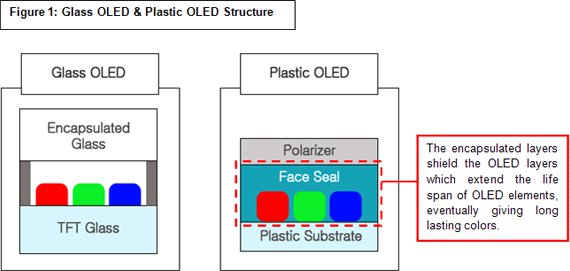
According to the report, the problem lies with LGD's thin film encapsulation equipment - specifically the equipment that deposited the organic particles - which apparently suffers from sub par performance, not good enough for commercial production. LG is using equipment made by its subsidiary LG PRI in the E6-1 line, which is now halted.
Juhua Printing Display uses Kateeva's OLED ink jet printers
Guangdong Juhua Printing Display Technology was established in 2016 by CSOT and Tianma with an aim to develop OLED ink-jet printing technologies and enable companies in China to collaborate on this technology.
While TCL-owned CSOT already announced that it is collaborating with Kateeva (and others), it was not clear whether Juhua Printing Display was also using Kateeva's printers, but we now have confirmation that indeed the China-based consortium is based on Kateeva's printers. This is obviously a major win for Kateeva, who is also working with BOE and Samsung, among others.

