What is an OLED?
OLED (Organic Light Emitting Diodes) is a flat light emitting technology, made by placing a series of organic thin films between two conductors. When electrical current is applied, a bright light is emitted. OLEDs are emissive displays that do not require a backlight and so are thinner and more efficient than LCD displays (which do require a white backlight).
OLED displays are not just thin and efficient - they provide the best image quality ever and they can also be made transparent, flexible, foldable and even rollable and stretchable in the future. OLEDs represent the future of display technology!
OLED vs LCD
An OLED display have the following advantages over an LCD display:
- Improved image quality - better contrast, higher brightness, fuller viewing angle, a wider color range and much faster refresh rates.
- Lower power consumption.
- Simpler design that enables ultra-thin, flexible, foldable and transparent displays
- Better durability - OLEDs are very durable and can operate in a broader temperature range
The future - flexible and transparent OLED displays
As we said, OLEDs can be used to create flexible and transparent displays. This is pretty exciting as it opens up a whole world of possibilities, some of which are already on the market!
- Curved OLED displays, placed on non-flat surfaces
- Foldable OLEDs and rollable OLEDs which can be used to create new mobile devices
- Wearable OLEDs, like e-tattoos or skin patches
- Transparent OLEDs embedded in windows or car windshdields
- And many more we cannot even imagine today...
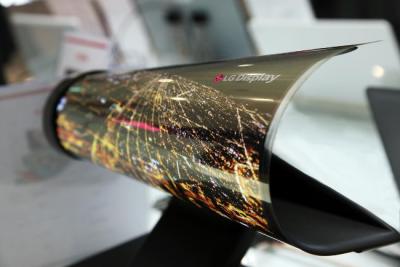
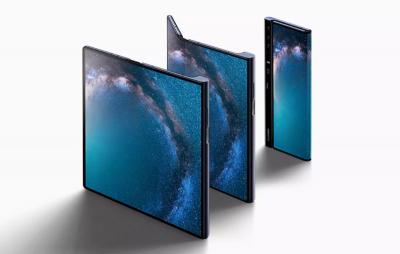
Flexible OLEDs are already on the market for many years (in smartphones, wearables and other devices) and since 2019, with the introduction of the Samsung Galaxy Fold, foldable devices are increasing in popularity. In 2019 LG also announced the world's first rollable OLED - its 65" OLED R TV that can roll into its base!
How do OLEDs work?
An OLED is made by placing a series of organic thin films between two conductors. When electrical current is applied, a bright light is emitted. Click here for a more detailed view of the OLED technology.

So what's organic about OLEDs?
OLEDs are organic because they are made from carbon and hydrogen. There's no connection to organic food or farming - although OLEDs are very efficient and do not contain any bad metals - so it's a real green technology.
Where can I find an OLED display today?
OLEDs are used today in mobile phones, digital cameras, VR headsets, tablets, laptops and TVs. In 2021, over 500 million AMOLED screens will be produced - mostly to satisfy demand from smartphones, wearables, tablets, laptops and TVs. The leading AMOLED producer is Samsung Display, and most premium phones today adopt either rigid or flexible OLED displays - including those from Apple, Samsung, Huawei, Oppo, Motorola, Sony and others.
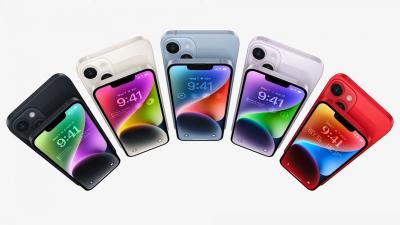
OLEDs are used in mobile devices today because they are thin, efficient, flexible and bright. OLEDs carry a price premium over LCDs, but companies are using these displays more and more as performance increases and prices decrease. Here's our list of products and gadgets with an OLED display. If you are looking to adopt an OLED display in your own device, our OLED Marketplace is the world's most comprehensive OLED display catalog.
OLED TVs
OLED is the best display technology - and indeed OLED panels are used today to create the most stunning TVs ever - with the best image quality combined with the thinnest sets ever. And this is only the beginning, as in the future OLED will enable large rollable and transparent TVs!
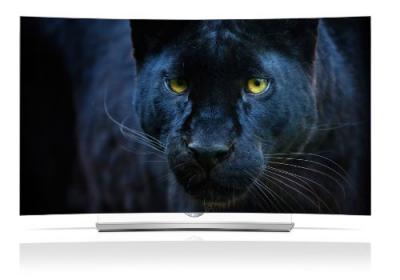
Currently the leading company that produces OLED TV panels is LG Display. The Korean display maker is producing a wide range of OLED TV panels, offering these to LG Electronics, Panasonic, Sony, Philips and others. In 2022 Samsung Display started producing its own OLED TV panels using its QD-OLED technology.
OLED disadvantages
OLEDs aren't perfect. First of all, it costs more to produce an OLED than it does to produce an LCD - although this should hopefully change in the future, as OLEDs has a potential to be even cheaper than LCDs because of their simple design (some believe that future OLEDs will be printed using simple ink-jet processes).
OLEDs have limited lifetime (like any display, really), that was quite a problem a few years ago. But there has been constant progress, and today this is almost a non-issue. Today OLEDs last long enough to be used in mobile devices and TVs. OLEDs can also be problematic in direct sunlight, because of their emmissive nature. But companies are working to make it better, and newer AMOLEDs (such as Samsung's Super AMOLED and Super AMOLED Plus and Nokia's CBD displays) are quite good in that respect - some even consider them superior to LCDs.
OLED white lighting
OLEDs can be used to create excellent light source. OLEDs offer diffuse area lighting and can be flexible, efficient, light, thin, transparent, color-tunable and more. OLEDs enable new designs and these devices emit healthier light compared to CFLs and LED lighting devices.
Several companies, all over the world are developing OLED lighting technologies. The market is still at its infancy, with very high prices as production volume is low. We hope that the future will see an increased adoption of OLED lighting, although currently there are many challenges yet before mass production begins.
About OLED-Info.com
OLED-Info is a knowledge hub focused on the OLED industry since 2004. We provide daily news, resources and services to the OLED industry and community. Check out OLED-Info's sitemap to view our complete list of OLED resources and articles. Here's some more info about us.
Be sure to subscribe to our monthly newsletter if you want to stay updated on OLEDs!
Further reading
- OLED Technology explained
- OLED TV
- OLED Lighting
- Flexible OLEDs
- Transparent OLEDs
- Samsung OLEDs
- The OLED Handbook, our very own comprehensive guide to OLEDs