OLED Smartphones - introduction and industry news
What is an OLED display?
An OLED display uses a new technology called OLED (Organic Light Emitting Diodes). OLED screens are brighter, more efficient, thinner and feature better refresh rates and contrast than LCD or Plasma.
OLEDs are made by placing thin films of organic (carbon based) materials between two conductors. When an electrical current is applied, a bright light is emitted. Since the OLED materials emit light, a backlight is not required (unlike LCDs).
OLEDs in mobile phones
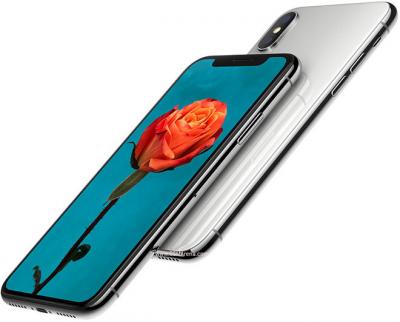
Mobile phones that boast OLED screens are rapidly becoming more prevalent, with over 500 million AMOLED screens annually - mostly to satisfy demand from mobile phones. Samsung has been using AMOLEDs in its high-end phones for many years, and most phone makers are also adopting OLED displays (including Apple, LG, Xiaomi, Huawei, Oppo, Vivo, Lenovo, Motorola, and others).
OLED displays are advancing quickly, and today smartphone AMOLED displays outperform LCDs in all parameters - except the price which is still at a premium.
Click here for our list of smartphones with AMOLED displays. Subscribe to OLED-Info Pro to access our complete list of OLED smartphones, with full information on the display types, producers, features and more.
Further reading
Apple signs up BOE to supply the majority of its LTPS AMOLED panels for the budget 2026 iPhone 17e
According to reports in Korea, Apple has signed up BOE as the first OLED supplier for its upcoming budget iPhone 17e smartphone, that will ship early in 2026. While BOE will supply the majority of these AMOLEDs, Samsung Display and LG Display are expected to also supply some panels to Apple.
This is a similar distribution that Apple chose for the 2025 iPhone 16e, that sports a 6.1" 1200 nits (peak) 60hz 1170x2532 AMOLED display. It is likely that the iPhone 17e will use a similar panel, and we're quite certain it will not be an LTPO OLED. Apple is aiming to ship around 8 million iPhone 17e devices in the first half of 2026.
LG Display starts ordering equipment for its E6 AMOLED fab expansion project
A few months ago, LG Display decided to expand its E6 production fab in Paju (referred to as the AP4 plant), as demand from Apple for smartphone iPhone OLED panels is on the rise. The AP4 line currently can produce 45,000 monthly 6-Gen substrates (1500mm x 1850mm), and LG Display will expand it to 60,000 substrates.

LG Display hopes to finalize the expansion project in the second half of 2026, perhaps even in time to supply smartphone AMOLEDs for Apple's 2026 iPhone 18 lineup. Now it is reported that LG Display started to place orders for the equipment required for this capacity upgrade.
Reports suggest LG Display struggles with supply chain problems, and may not be able to produce enough iPhone 17 AMOLEDs
According to industry reports, LG Display is struggling with problems in its supply chain, and the company is not able to produce enough iPhone 17 LTPO AMOLED panels to satisfy Apple's needs. It is suggested that Apple may have to shirt some of its orders to Samsung Display. It seems as if LG Display cannot get a stable supply of glass fiber, a raw material that LG Display uses as part of the AMOLED glass carrier glass process.
LG Display is producing AMOLED displays for Apple's latest iPhone 17, 17 Pro Max, and 17 Air models. Samsung Display, meanwhile, produces AMOLED displays to all of the iPhone 17 models, including the iPhone 17 Pro. It is estimated that SDC will bring its AMOLED fab utilization to close to 100% until the end of 2025 to satisfy Apple's demand.
Huawei launches new AMOLED phones and tablets, including the world's first 8000 nits smartphone display
Huawei introduced several new devices yesterday, all with AMOLED display. First up we have the new Huawei Mate 80 smartphone family, that includes 3 models. The basic Mate 80 and the Mate 80 Pro both offer a 6.75" 120Hz 1280x2832 LTPO display.

The flagship Mate 80 Pro Max has the world's brightest display - a 6.9" 1320x2848 120Hz 8000 nits LTPO AMOLED.
HKC wins first AMOLED orders, to enter mass production soon and expand its OLED product range
Shenzhen-based HKC is moving forward with its AMOLED project, and the company said that a few days ago, on November 13, it has received its first OLED panel orders. The company said that its OLED panels has officially passed customer testing and verification.
This first order is for HKC's smartphone AMOLED panels that the company showed in July 2025. These OLEDs are produced on an advanced Oxide-TFT (IGZO) backplane, likely on Royole's old production line, see more below. HKC says that the performance of its IGZO smartphone AMOLED displays matches the industry's leading products.
Samsung Display and BOE ended their long OLED IP battle, as BOE agrees to pay royalties for Samsung's patents
According to a report in Korea, BOE and Samsung Display have finally ended their long AMOLED technology dispute, as BOE has agreed to pay royalties for Samsung Display's OLED IP. The two companies will withdraw all their ongoing lawsuits, including in the US and China.

Samsung Display and BOE are fighting a legal battle for quite some time, mostly in the US. The most important one was based on Samsung's claims that BOE, and also some phone parts retailers, infringe upon its AMOLED patents, and have asked the US International Trade Commission (ITC) to ban the import of any devices that use BOE's AMOLED displays, in addition to after-market AMOLED displays. In July 2025, the ITC found BOE guilty as charged, and following its preliminary ruling to ban BOE's AMOLED, it updated that it will likely ban the import of BOE's AMOLEDs to the US for 15 years, and issued a Limited Exclusion Order (LEO). The ban was not to include devices that use BOE's AMOLEDs, though (such as Apple's iPhones), but it was still to be a problem for BOE which is why the company likely agreed to pay the royalties to Samsung.
TCL CSOT shows its latest OLED display prototypes, including inkjet printed panels, high-PPI Real-RGB panels and more
TCL CSOT is hosting its own Global Display Tech-Ecosystem Conference (DTC 2025) in Suzhou, China, showcasing its latest next-generation display technologies, panels and prototypes.
First, TCL is showing the world's highest PPI Real-RGB G-OLED display, at 1,512 PPI. This is a 2.56" panel with a resolution of 2560x2740, offering a 120Hz refresh rate and a wide color gamut. TCL targets XR (VR) devices for this display. A couple of months ago Xiaomi announced its 17 Pro Max flagship smartphone, that featured TCL's 6.9" 1200x2608 120Hz 3,500 nits LTPO Real-RGB AMOLED (and also a secondary 2.9" 596x976 LTPO AMOLED back screen). TCL says that its Real-RGB architecture not only increases actual resolution and increases production yields, but it also reduces the power consumption by 26%.
Omdia forecasts fast growth for polarizer-free OLED panels
Omdia estimates that OLED makers will increase their adoption of polarizer-free OLED technology (sometimes referred to as Pol-Less OLEDs, and also as Color Filter on Encapsulation or COE, we will discuss this below), and the market share of the panels will grow dramatically in the future.
According to Omdia, currently only about 0.1% of smartphone AMOLED panels utilize a polarizer-free architecture, but this will grow to 20.3% by 2032. In tablets, the market share is currently 0%, and it will grow tot 20.3%.
Bloomberg shares Apple's IT OLED adoption roadmap
Bloomberg posted an article in which it details Apple's IT OLED adoption roadmap, saying that the company plans to introduce OLED iPad Mini devices in 2026, an OLED iPad Air in 2027 or 2028, and OLED MacBook Air laptops in 2028.
Apple has a long-term goal of utilizing higher performance OLED displays across all of its devices - today it is using OLEDs in all of its smartphones, VR, and wearables and it has also introduced OLEDs into its high-end iPad Pro tablets. Next year, we expect the company to introduce its first OLED laptop and also its first foldable OLED smartphone.
UBI: Samsung and LG Display shipped almost 99% of Apple's iPhone 17 AMOLED panels
Last month Apple launched its iPhone 17 range, all equipped with LTPO AMOLED displays. According to UBI Research, Apple ordered almost 89 million OLED panels, for all phones in the series, from its suppliers - Samsung Display, LG Display and BOE. It is reported that Apple's iPhone 17 sales have been stronger than expected.
UBI estimates that Samsung Display supplied 57 million panels, LG supplied 30 million, and BOE only supplied 1.3 million units - or about 1.4% percent of Apple's total orders.
Pagination
- Previous page
- Page 3
- Next page