The Korean government is funding a new program ("Future Flagship Program") that will develop transparent and flexible OLED technologies with an aim to produce ultra high-definition 60" flexible OLED displays by 2017. The project will be led by LG Display, and will also include equipment-maker Avaco.
 Flexible OLED TV concept (Sony)
The Korean Ministry of Knowledge Economy is spearheading the program, and they say that this technology may have a large impact on the Korean economy, creating 840,000 jobs and $56 billion in yearly exports. It will also help to widen the technological gap between Korea and China in the display sector. The Korean government chose several key technologies that will help to further develop the industry, and OLED is one of them.
LGD and Avaco are already collaborating on flexible OLED equipment, and Avaco was chosen to supply equipment (worth $6.7 million) to LG's upcoming flexible OLED pilot production line. Reports suggest that LG will start construction by 3Q 2012, and the new line will become active by the end of 2012. An LGD official said that it will take 1-2 years to develop and verify the process and produce prototypes. These will be small plastic-based OLEDs, though.
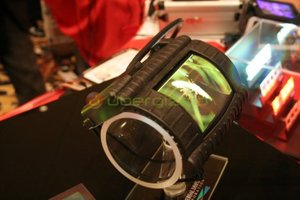
LG Display's flexible OLEDs will use the same technology as Samsung's flexible prototypes - a polyimide coated substrate and direct-emission RGB sub-pixels (as opposed to LG's OLED TV which use WOLED with color filters). Of course it's unknown what kind of technologies and architectures will be used in the future large flexible/transparent panels being planned in the new project.
Comments
It would be far better for OLED to concentrate on keeping up with the 4K displays or get left behind with such expensive inferior resolution technology...
LGD already has plans for 4K OLEDs, in the "near future" : http://www.oled-info.com/lg-display-sid-2012


As oled-info have wrote about before in 2011 about this research project in Korea between government research program at Technical University and the Korean semiconductor display industry to develop large Amoled displays on flexible substrate until 2017-2018.
Samsung Mobile Display have allready started to manufacturing Amoled on flexible substrate up to 10" and some company have done a large order on this flexible Amoled displays, wonder what company that can be?
Samsung Mobile Display is using polyamide as substrate for their flexible Amoled displays, probably they are using amorf polyamide because amrof polyamide have both higher glass temperature than crystalline and is transparent.
Both higher glass temperature and transparent is interesting properties in flexible Amoled displays.
Higher glass temperature makes this Amoled displays with longer lifetime and transparent is an interesting property if some tablet pc maker or Smartphone maker want to make Amoled displays with partially or totally transparent displays in future.