Perovskite-Info launches a new edition of its Perovskite for Displays Market Report
We're happy to announce an update to our Perovskite for the Display Industry Market Report. This market report, brought to you by the world's leading perovskite and OLED industry experts, is a comprehensive guide to next-generation perovskite-based solutions for the display industry that enable efficient, low cost and high-quality display devices. The report is now updated to July 2024, with all the latest commercial and research activity - including 9 new research papers, new company, new brochures, and commercial updates and more!
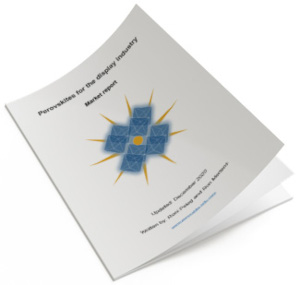
Reading this report, you'll learn all about:
- Perovskite materials and their properties
- Perovskite applications in the display industry
- Perovskite QDs for color conversion
- Prominent perovskite display related research activities
The report also provides a list of perovskite display companies, datasheets and brochures of pQD film solutions, an introduction to perovskite materials and processes, an introduction to emerging display technologies and more
TCL CSOT shows its latest OLED, MicroLED and QD-EL displays at Displayweek 2024
TCL CSOT demonstrated its latest displays, technologies and prototypes at Display Week 2024. The company is focused on inkjet printing technologies, and a lot of the displays on show were indeed printed.
So first up, we TCL demonstrated a 14" 2880x1800 400 nits 30-120Hz ink-jet printed LTPO AMOLED display. The display is produced on a glass substrate, with thin film encapsulation (a 'hybrid OLED').
Samsung shows its latest OLED and QD-EL displays at Displayweek 2024
Samsung Display had a rather large booth at Displayweek 2024, showing its latest OLED displays and technologies. Samsung showed several displays - including foldable smartphone panels, laptop and tablet displays, two QD-OLED displays, its 9.4" round automotive AMOLED, and more.
One interesting display was a panel that combines a foldable and a rollable display, that can open up to an impressively large display. Samsung brands it as a Flex Note Extendable Display.
Sharp withdraws from the LCD TV market, the future of its display business is unclear
Japan-based Sharp Corp, an LCD display industry pioneer, announced that it will stop all of its large-area LCD production by the end of 2024. Sharp's Osaka-based factory was the last LCD TV fab in Japan, and it will be turned into a data center run by its subsidiary Sakai Display Products Corp.

Sharp says that its current midterm plans are strengthen its home appliances and office equipment businesses, by incorporating AI technologies. It also plans to sell its semiconductor business. Sharp says it will focus its remaining small/medium LCD display business on the automotive and VR sectors.
Sony launches its 2024 TV lineup, with a mid-range OLED TV and a top-tier MiniLED backlit QLED
Sony announced its 2024 TV lineup, and interestingly, the top model (the Bravia 9) is a Mini-LED backlit QLED TV. The entry-level model (the Bravia 7) is also a QLED display, while the mid-range model, the Bravia 8, is based on LGD's WOLED panels.
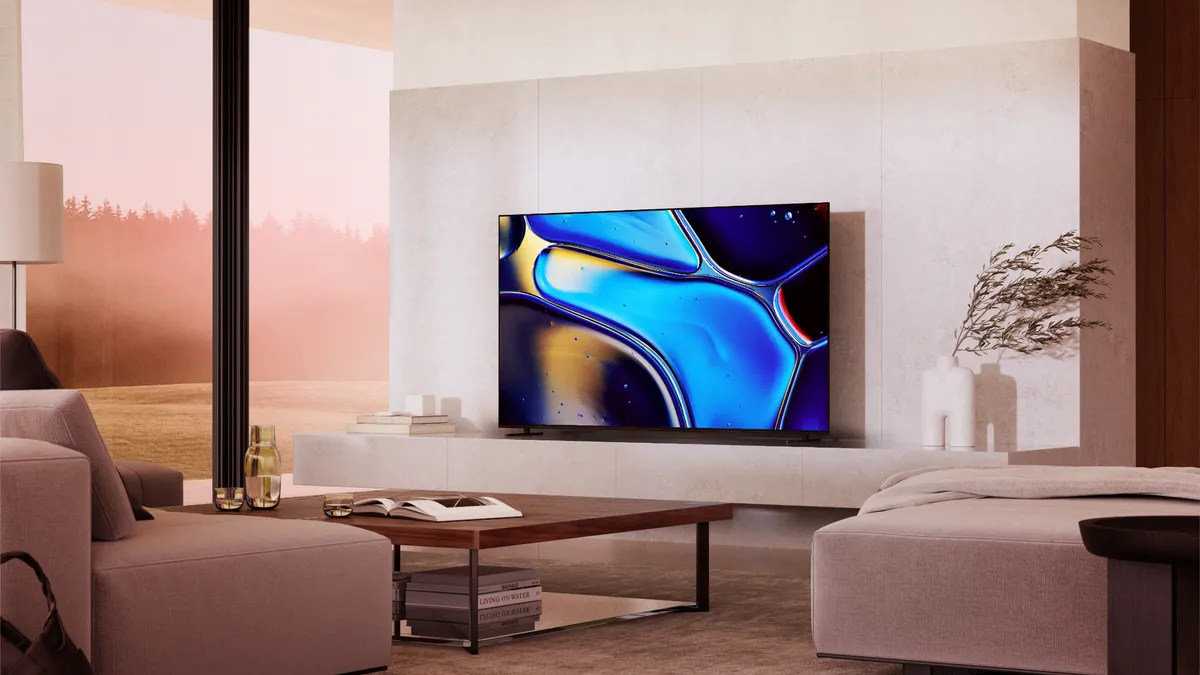
The Bravia 8 offers 55-, 65- and 77 inch 4K WOLED panels, Sony's OLED Acoustic Surface Audio+ sound system, an upgraded XR Processor, and the creator calibration picture settings. Sony's 2024 TVs will launch in the summer of 2024.
Researchers develop a perovskite-based 3D printing ink that could power next generation OLED devices
Researchers at Lawrence Berkeley National Laboratory (Berkeley Lab), led by Prof. Peidong Yang, developed a new 3D printing ink based on perovskite materials, that exhibits unity photoluminescence quantum yield (PLQY). Interestingly, as it is a 3D printable ink, it is possible to create luminescent objects from it, as seen in the image below:
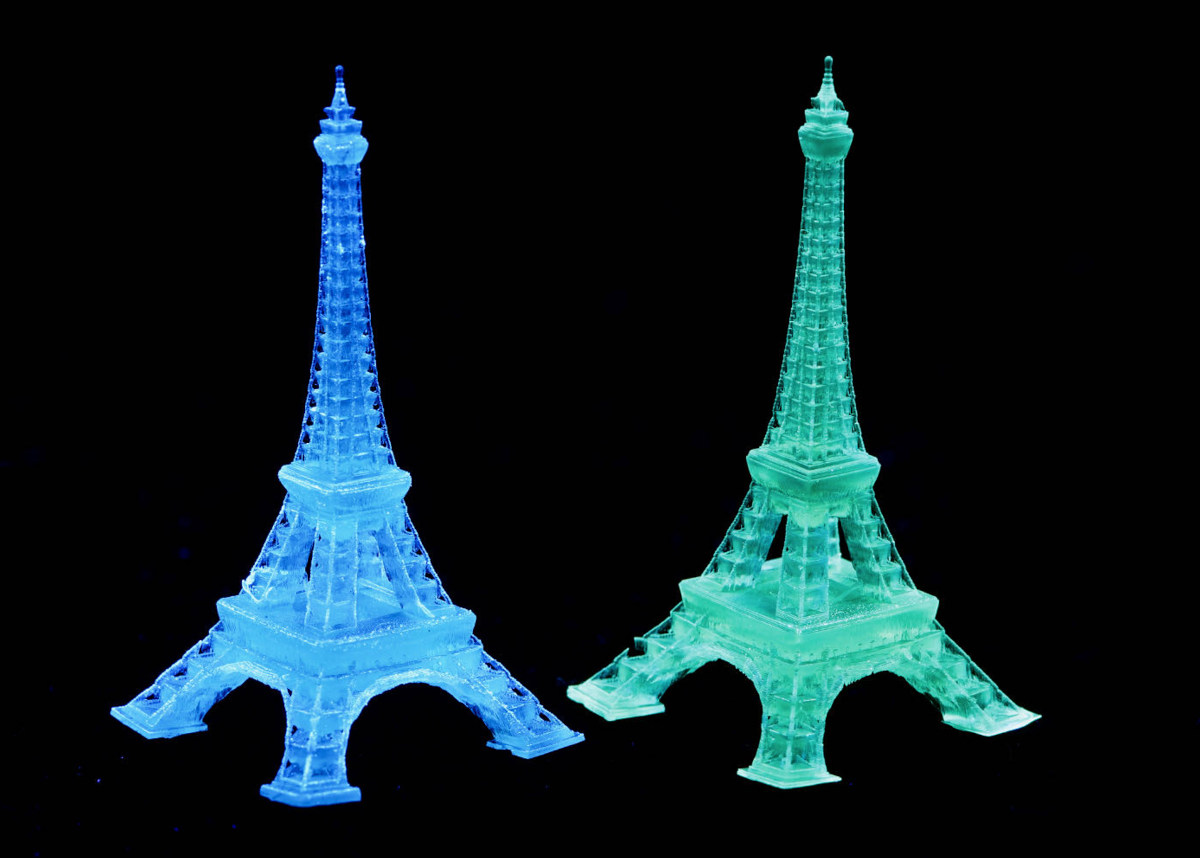
The researchers brand the new ink as 'supramolecular ink', and say it is produced without any rare metals. It is a combination of several powders containing hafnium (Hf) and zirconium (Zr), and is made at room temperatures. In a process called supramolecular assembly, tiny molecular building block structures are self-assembled within the ink. These supramolecular structures enable the material to achieve stable and high-purity synthesis at low temperatures.
Toray Research Center shows how OLED inspection and analysis enable the production of higher performance OLED panels
Toray Research Center (TRC) has launched a new open online webinar focused on OLED inspection and analysis technologies. TRC, who supplies technical analysis and support for R&D and manufacturing, invites you to attend the online lectures at no cost, to get a deeper understanding on OLED inspection and analysis, and how to achieve higher performance displays. The webinar recordings are accessible until February 15.

The webinar include four presentations:
- Identification of Trace Impurities Using High-Resolution Mass Spectrometry (Toward High-Quality OLED Panels)
- Analysis of Small Molecule OLED Layers in Solution Process and Vacuum Deposition Process
- Moisture Diffusion Evaluation in Encapsulant
- Analysis of QD sheet (Quantum Dot Enhancement Film)
The first presentation, titled Identification of Trace Impurities Using High-Resolution Mass Spectrometry (Toward High-Quality OLED Panels), details examples of possible degradation in OLED devices that lead to performance reduction. In this presentation, TRC discusses the role of analysis, the advantages of high mass resolution, different evaluation techniques and how it can help developers increase the performance of OLED displays.
SDC upgrades its QD-OLED line, starts producing 31.5" 4K panels
Samsung Display announced that it is beginning to produce a new 31.5" 4K QD-OLED. This is SDC's highest density QD-OLED display, at 140 PPI. The company recently upgraded its QD inkjet printing deposition system to support this higher resolution. It will also enable SDC to produce 8K 65" QD-OLED displays (that will also be 140 PPI).
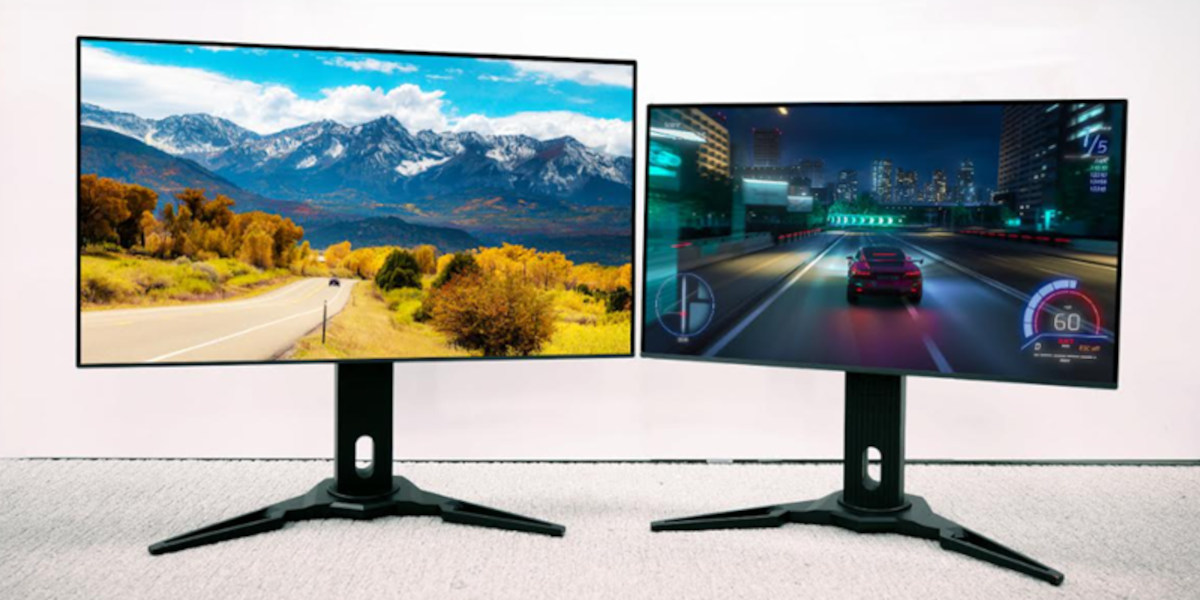
Samsung Display also announced that next year it will start producing 27" QHD QD-OLED monitor panels that will support a 360Hz refresh rate, targeting the gaming monitor market.
Reports suggest Kateeva's printers failed Samsung's QD printing tests, will not be used for QD-OLED production
According to reports, Kateeva's QD-OLED printing project saga is not over. Samsung Display tested the company's latest printers, but these failed the tests and Samsung Display will not but these printers. SDC planned to replace the currently-used Semes' printers, which also suffer from low performance.
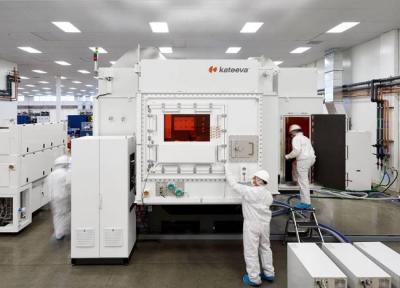
Samsung Display is also not committed yet to expand its QD-OLED production lines, which means that in any case it does not need to buy new printers for production expansion. Earlier reports suggested that SDC wanted to upgrade it current capability for higher density (to reach 8K TV printing), so this may be the reason behind the testing of Kateeva's new printers.
The Korean Government to designate OLED as a national strategic technology
In April 2022, we reported that the Korean Government is considering designating OLED technology as a "national strategic technology", which means that companies will be given tax benefits, to encourage further investments and R&D in the OLED industry.
According to new reports to Korea, the government will unveil a new draft tax law tomorrow that will indeed include new benefits to OLED developers, as OLED will be regarded as a national strategic technology indeed. This will encourage companies to establish new OLED R&D activities and new production lines. The government is also also looking to add microLED and quantum dot display technologies as strategic technologies.

