The Elec: UDC's blue PHOLED material is still unstable, may delay market introduction
Universal Display Corporation has announced several times that it is progressing with its blue PHOLED material development, and it is on track to release the first commercial material by the end of 2024. In November 2023 we reported that UBI estimates that Samsung has delayed the adoption of a blue PHOLED to the second half of 2025.
 Now there's a new report in Korea that claims that UDC's blue PHOLED project is facing technical challenges, and UDC is still not able to achieve a long-lasting blue emitter at the right color point. It will be interesting to know whether UDC addresses this issue in its next investor conference call (May 2nd).


BOE commercializes tandem smartphone AMOLED displays to improve lifetime and efficiency
According to reports, BOE has commercialized a new tandem OLED architecture, that enabled an improvement of 40% in power consumption and a 600% increase in display lifetime.
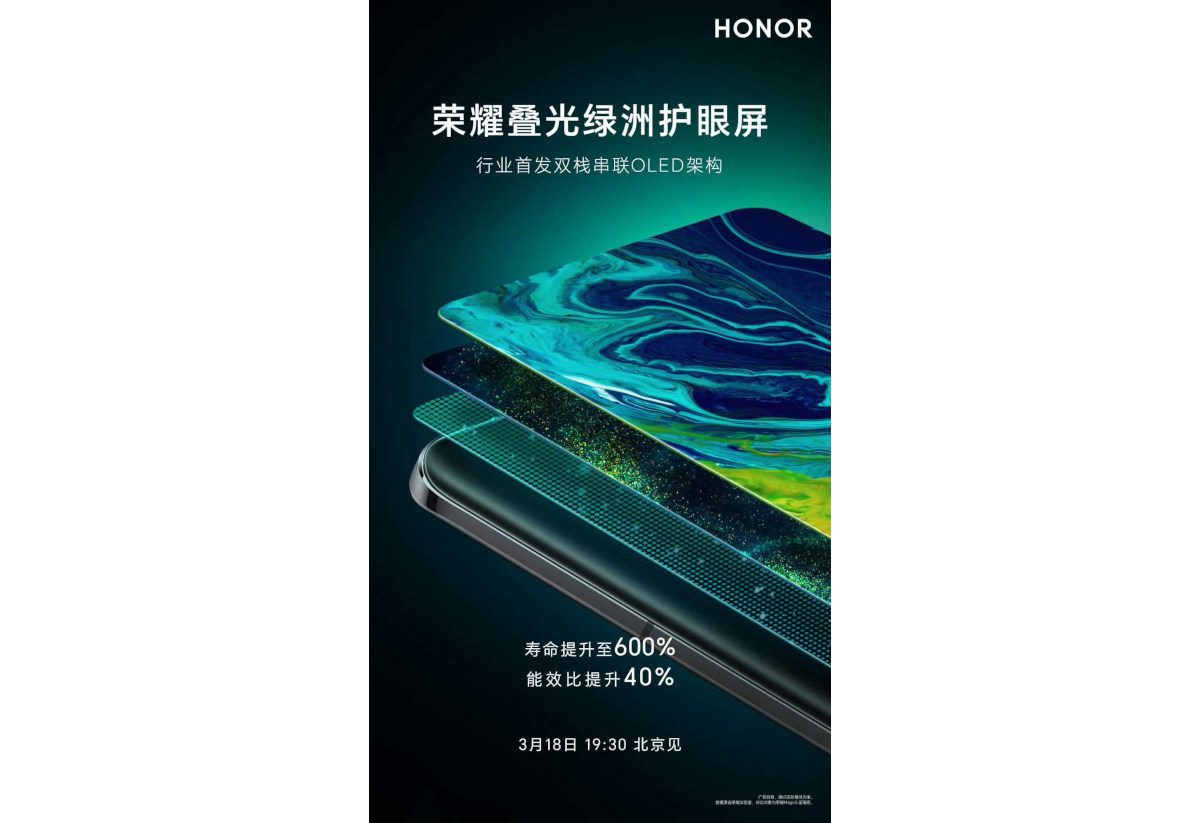
As you can see from the teaser poster above, Chinese smartphone maker Honor will release the first phone to adopt the new panel, the Honor Magic 6 Ultimate, next week on March 18th.
Samsung researchers collaborate with the UK's NPL to better understand blue OLED degradation mechanisms
Researchers from the UK's National Physical Laboratory (NPL), together with the Samsung Advanced Institute of Technology (SAIT), released a new study to better understand the degradation of blue OLED devices.
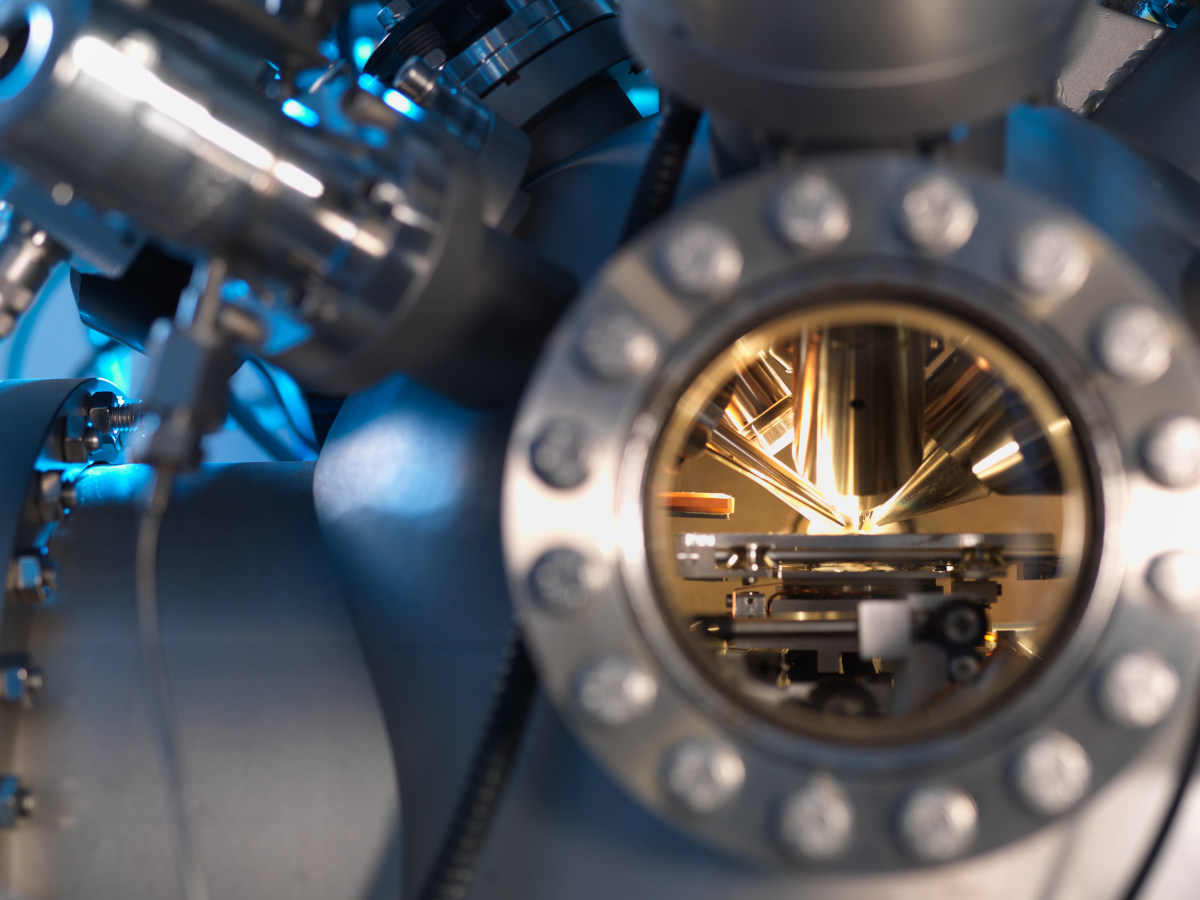
Close-up of the OrbiSIMS instrument’s vacuum chamber showing the nozzles of the ion beams and electrode that extract ionised molecules for analysis (Picture credit: NPL)
The OLED degradation mechanisms that limit the lifetime of blue OLED emitters, whether physical, chemical or something else, are still not yet fully understood. Understanding the degradation mechanism of blue OLEDs is essential to improve their performance and stability. The NPL / SAIT team used OrbiSIMS, an innovative mass spectrometry imaging technique invented at NPL in 2017, to study OLED degradation.
Toray Research Center shows how OLED inspection and analysis enable the production of higher performance OLED panels
Toray Research Center (TRC) has launched a new open online webinar focused on OLED inspection and analysis technologies. TRC, who supplies technical analysis and support for R&D and manufacturing, invites you to attend the online lectures at no cost, to get a deeper understanding on OLED inspection and analysis, and how to achieve higher performance displays. The webinar recordings are accessible until February 15.

The webinar include four presentations:
- Identification of Trace Impurities Using High-Resolution Mass Spectrometry (Toward High-Quality OLED Panels)
- Analysis of Small Molecule OLED Layers in Solution Process and Vacuum Deposition Process
- Moisture Diffusion Evaluation in Encapsulant
- Analysis of QD sheet (Quantum Dot Enhancement Film)
The first presentation, titled Identification of Trace Impurities Using High-Resolution Mass Spectrometry (Toward High-Quality OLED Panels), details examples of possible degradation in OLED devices that lead to performance reduction. In this presentation, TRC discusses the role of analysis, the advantages of high mass resolution, different evaluation techniques and how it can help developers increase the performance of OLED displays.
Single-layer TADF OLEDs outperform the best multi-layer device in both efficiency and lifetime
In 2023, we reported on research conducted at Germany's Max Planck Institute, led by Prof. Paul W.M. Blom, that looks into single-layer OLED devices. In such devices, a single TADF OLED emitter layer is sandwiched between two electrode - a much simpler design compared to commercial OLED devices that use multilayer stacks, sometimes with 10 or more layers. The researchers the the MPI say that in fact it is possible to develop highly efficient OLEDs with just the TADF emitter - and have demonstrated 100% IQE single-layer devices, with an EQE of 27.7%.
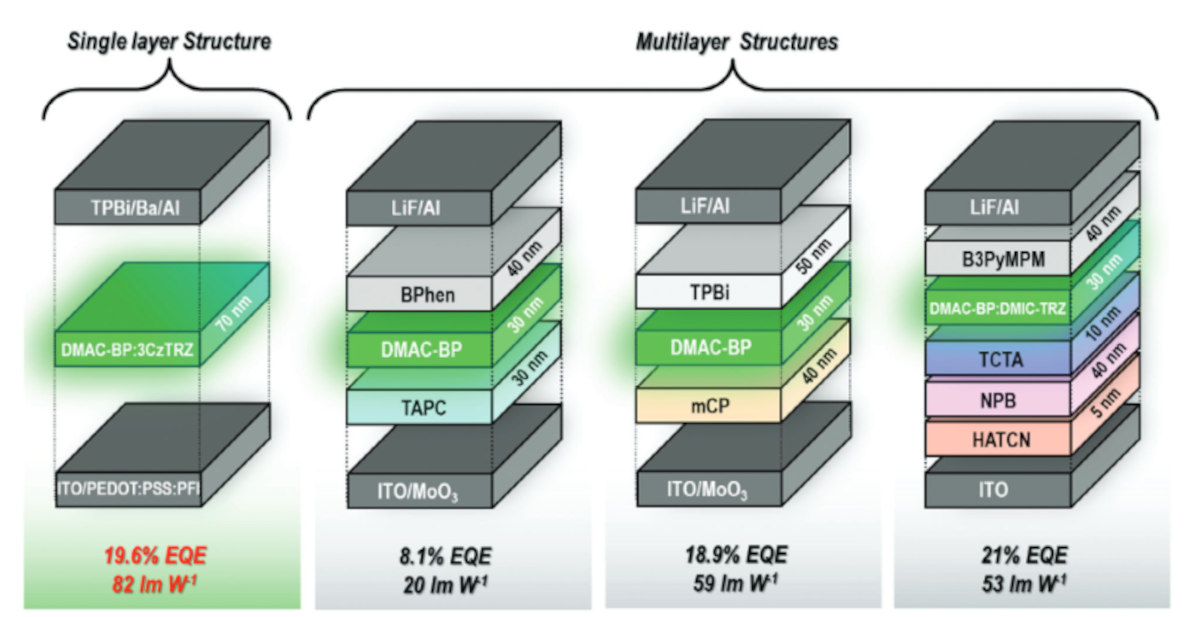
Prof. Blom's group continues to improve its single-layer TADF OLED device, and have now reported that by employing a recently developed trap-free large band gap material as a host for the DMAC-BP OLED emitter, a nearly balanced charge transport is achieved. The device achieves a record power efficiency for DMAC-BP TADF OLEDs of 82 lm/W - surpassing the best reported multilayer power efficiencies of 52.9–59 lm/W. This is due to the lower operating voltage. The single-layer device reaches an external quantum efficiency (EQE) of 19.6%, which is only slightly lower than the reported EQEs of 18.9–21% for multilayer devices. In addition to the high power efficiency, the operational stability is greatly improved compared to multilayer devices and the use of conventional host materials in combination with DMAC-BP as an emitter.
Researchers use intermittent vacuum deposition to increase OLED device performance
Researchers from Japan's Chiba University developed a new method to deposit thin OLED layers that achieves controllable molecular arrangement - that can be used to increase the efficiency and lifetime of OLED devices.
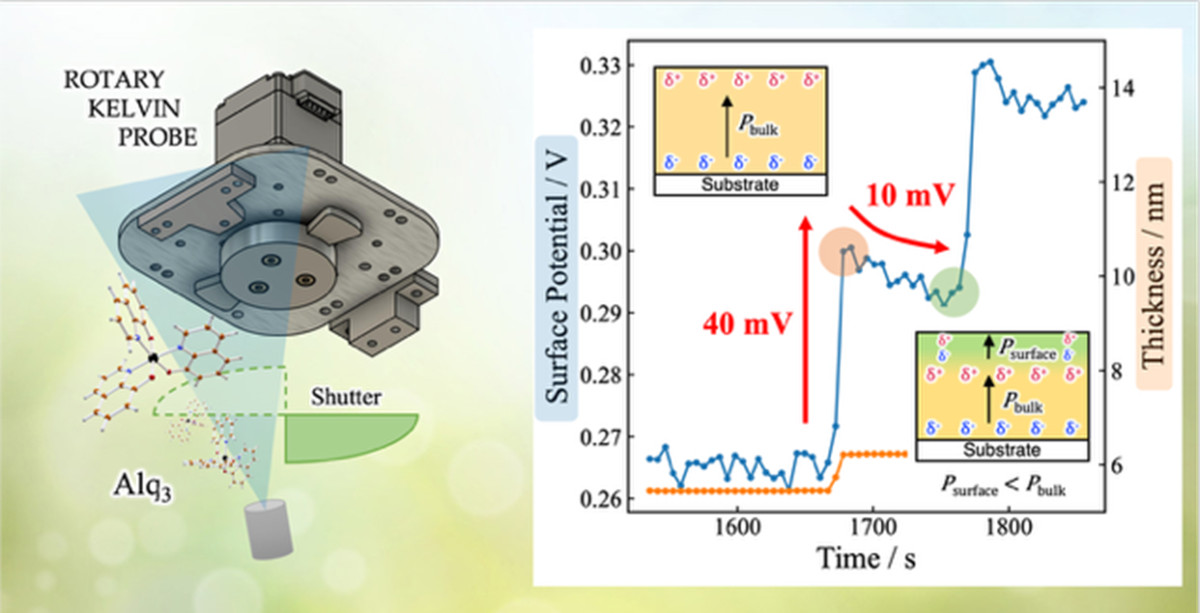
The method, called intermittent deposition, uses pauses in deposition and changes in deposition conditions to invert the orientation of the organic molecules, thus achieving high control over the resulting films. The researchers built on a tool called Rotary Kelvin Probe (RKP) that is used to measure the surface potential during and after the deposition in real-time. The new approach of intermittent deposition created a relaxed and stable surface layer with controllable polarization.
An interview with Pixelligent's CEO, to discuss the company's technology and latest OLED industry updates
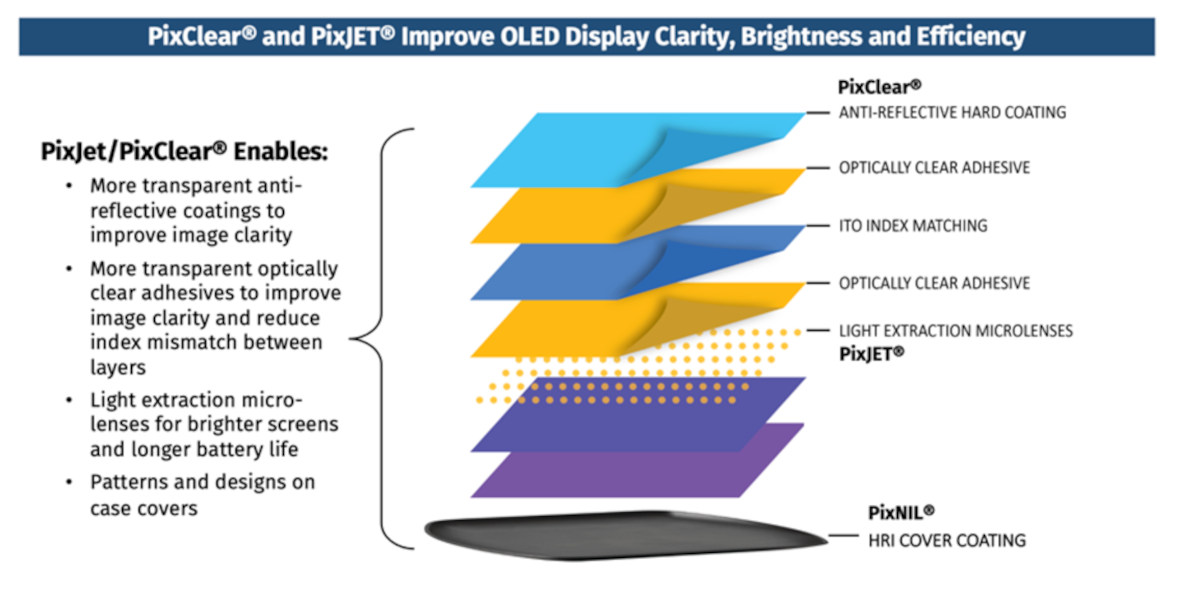
US-based Pixelligent is an advanced materials company that delivers next generation optical materials applications in lighting and displays. For the OLED industry, Pixelligent offers materials that significantly increase light output by increasing the refractive index of materials in the device.
Pixelligent's President and CEO, Craig Bandes, was kind enough to answe a few questions we had, to learn more about Pixelligent and its solutions for the OLED industry.
Hello Craig! Can you explain your technology and materials and how they enhance the efficiency of OLED display?
We are best known for our high refractive index (HRI) nanocrystal formulations and dispersions that deliver breakthrough performance in next-generation electronics, like extended reality, displays, optics, and sensors. We designed our PixJet®, PixNIL®, and PixClear® products to offer the best combination of brightness, clarity, operating efficiencies, and device-lifetime.
LG Display aims to expand the use of deuterated OLED compounds
In 2021, LG Display started to adopt deuterated OLED compounds in its WOLED panels, to improve the lifetime, efficiency and brightness. Today, all of LG's WOLED TV panels use deuterated blue OLED emitters, in which hydrogen is replaced by its more stable isotope, deuterium. The higher stability enables longer lifetime, which in turn enables higher brightness and efficiency.
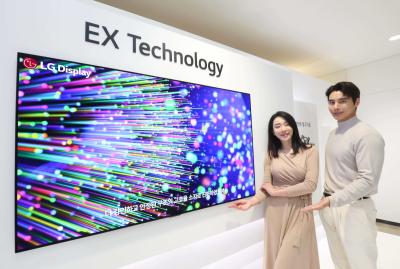
It is now reported in Korea that LG Display now aims to expand the adoption of deuterated OLED compounds to its red and green and yellow emitters, and also other layers in the OLED stack. If this report is true, it means that LGD will also use the technology in its mobile (p-OLED) panels, not just its OLED TV ones.
Visionox produced its first ViP AMOLED display, is progressing towards mass production
Visionox announced that it has produced the first mass-production sample ViP AMOLED display. The company aims to start mass producing small and medium-sized ViP AMOLED soon, and later apply the technology for large-area panels as well.
The company did not detail when it expects to start actual mass production. It did update that it has already applied for over 500 patents regarding to ViP technology, over 13 different technical fields. The company also says it is in talks with several key customers to define its production process and final display capabilities.
TCL CSoT reiterates plans to start producing inkjet printing OLEDs in 2024, to target IT displays
TCL CSoT says that it will start producing OLED displays using an inkjet printing process in the second half of 2024. This is excellent news and good to know CSoT is still on track for initial production in 2024. The company says it will first target the IT and medical sector.
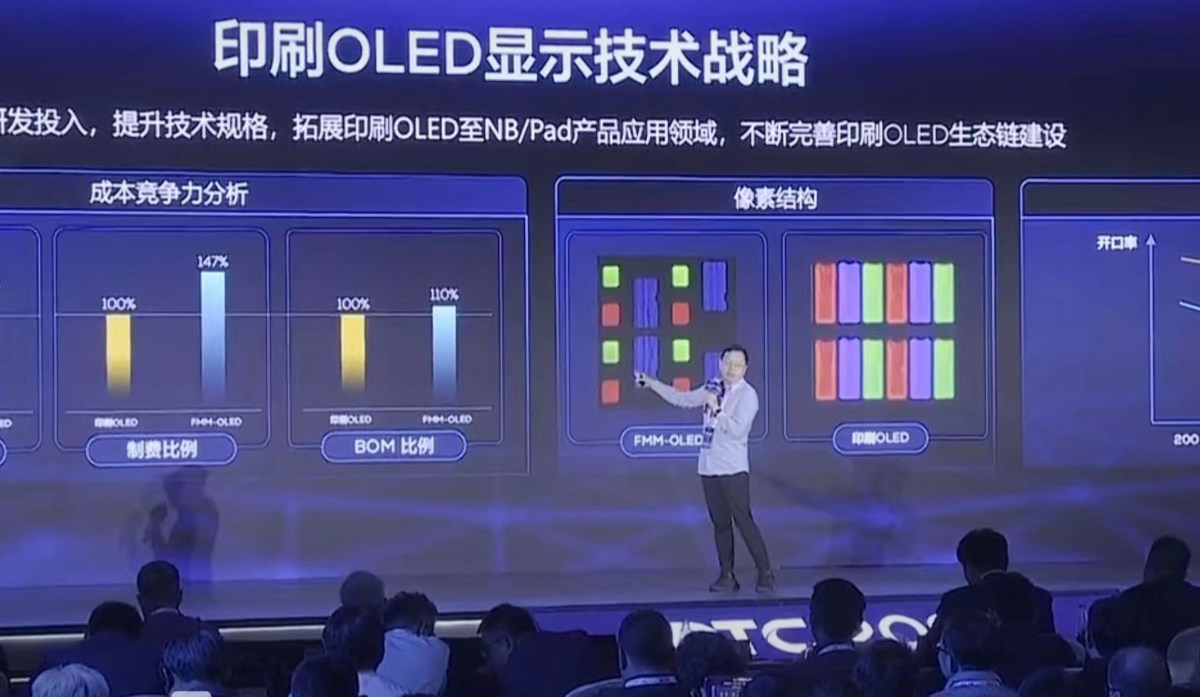
The company says that the cost of producing OLEDs using its inkjet printed panels will be lower compared to the currently-used FMM based method, and its OLEDs will offer superior performance (in lifetime, mostly) as its process enables higher aperture.