Reports suggest that Nintendo has already finished developing the OLED version of the Switch 2 gaming console
In October 2021, Nintendo launched its first OLED gaming console, the Nintendo Switch OLED. The new OLED device is popular - eight months after the launch Nintendo announced it shipped over 5.8 million devices, and earlier this month the company announced it has sold over 7 million Nintendo Switch OLED devices in Japan alone.
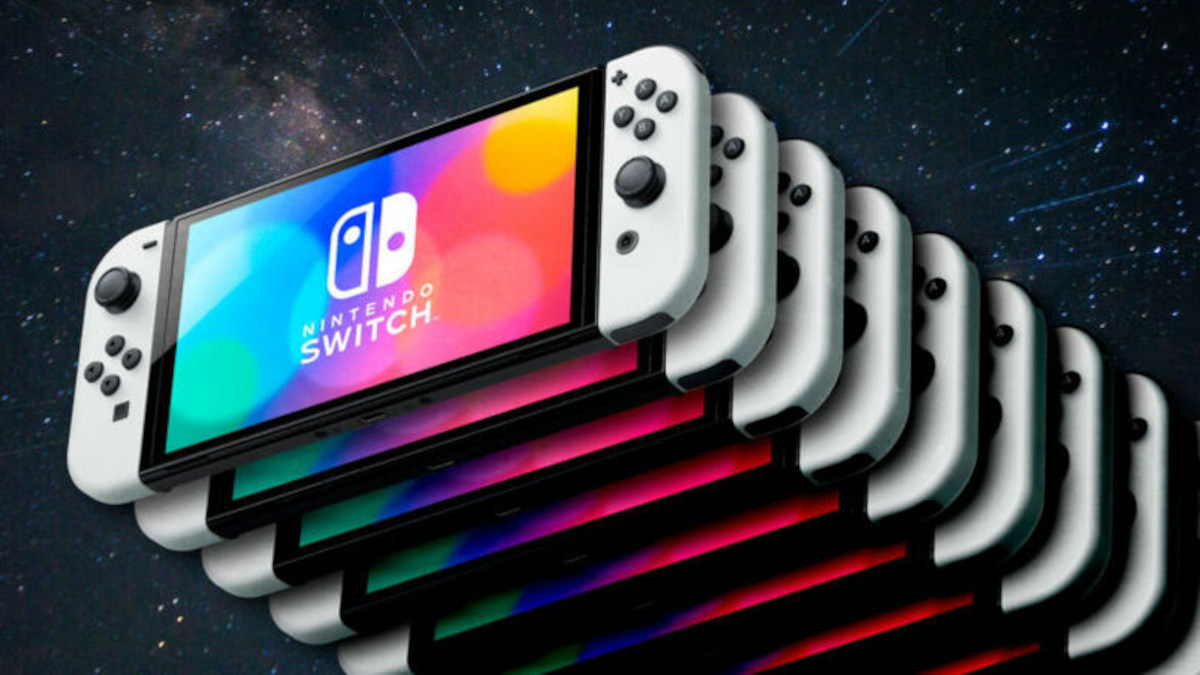
In early 2024, we heard that Nintendo is working on its next-generation console that will replace the Switch and Switch OLED devices, which will utilize an 8" LCD display (produced by Sharp). This was a disappointment - especially as people seem to love the OLED display. But according to a new report, Nintendo has already finished the development of a Switch 2 OLED device, that will released shortly after the LCD model is launched (perhaps even still in 2024). The OLED, as in the original Switch OLED device, will be produced by Samsung Display.


Samsung said to adopt Sony OLED microdisplays in its upcoming VR headset
Samsung Electronics is developing a new high-end VR headset, likely aiming to release it by the end of 2024. According to reports, Samsung will integrate OLED microdisplays produced by Sony, similar 1.4" 4K displays that are used by Apple in its Vision Pro headset.
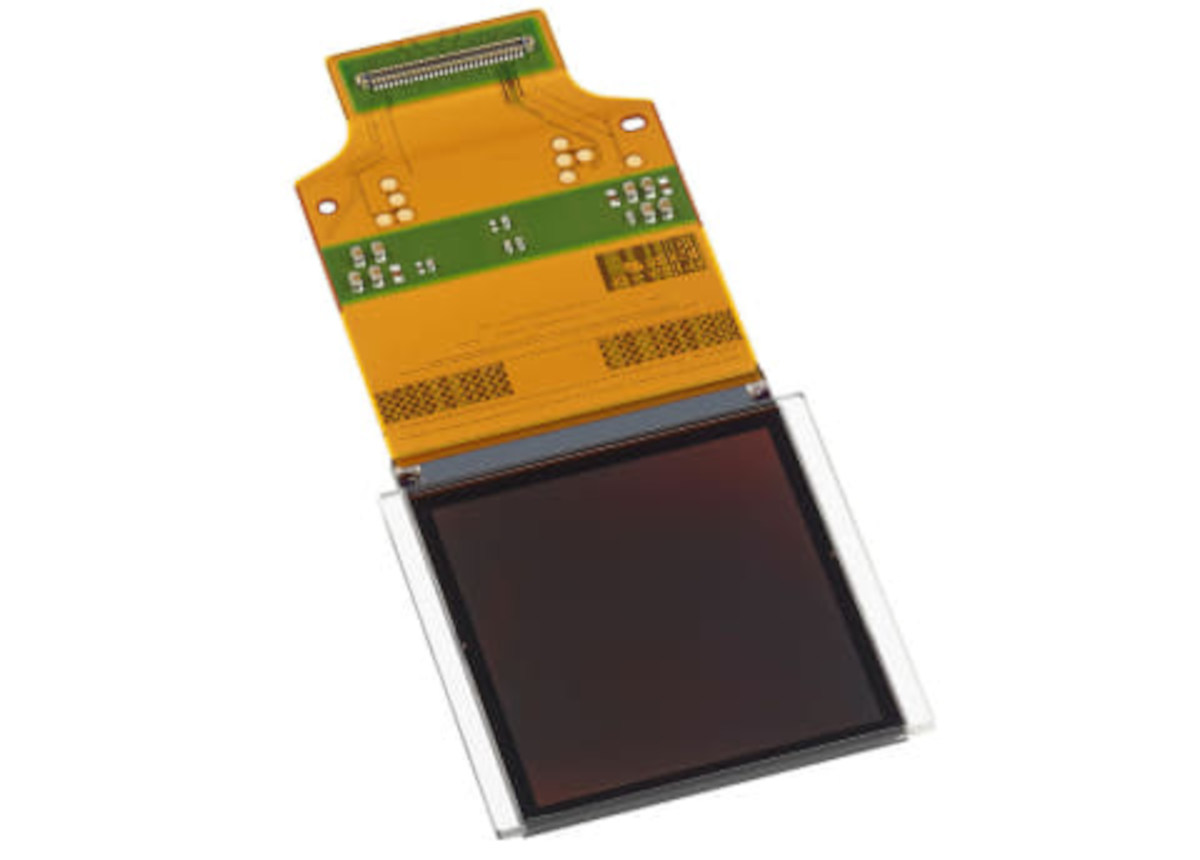
Samsung Display is developing its own OLED microdisplays, and the company is looking to bring such displays to market soon - in fact initial production will begin by the end of 2024, and full mass production will be achieved in 2026. It is not clear whether this new Sony design win means that Samsung Electronics prefers the Sony displays over SDC's, or whether it's simply a matter of Samsung Display not ready in time for mass production.
The Elec: UDC's blue PHOLED material is still unstable, may delay market introduction
Universal Display Corporation has announced several times that it is progressing with its blue PHOLED material development, and it is on track to release the first commercial material by the end of 2024. In November 2023 we reported that UBI estimates that Samsung has delayed the adoption of a blue PHOLED to the second half of 2025.
 Now there's a new report in Korea that claims that UDC's blue PHOLED project is facing technical challenges, and UDC is still not able to achieve a long-lasting blue emitter at the right color point. It will be interesting to know whether UDC addresses this issue in its next investor conference call (May 2nd).
LG Display to increase its WOLED panel shipments to Samsung, will reach almost 1 million units in 2024
According to a new report in Korea, LG Display aims to increase its OLED TV panel shipments to Samsung Electronics in 2024, and to reach almost 1 million units.
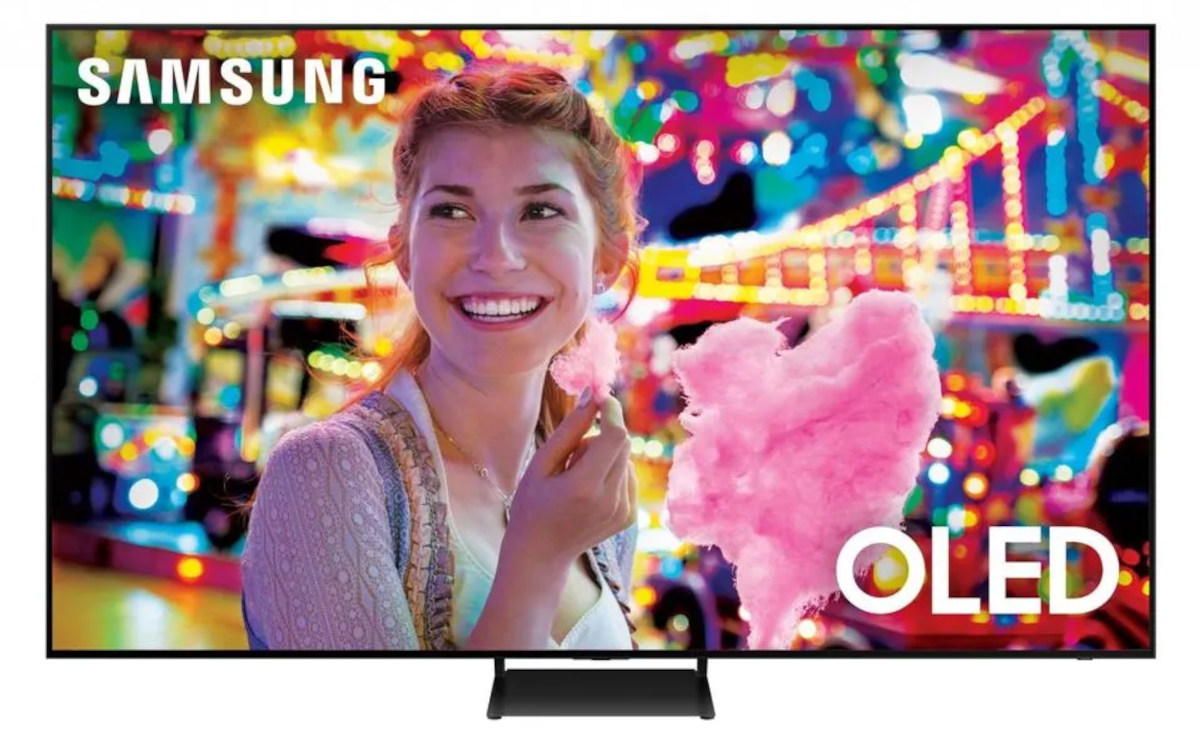
Samsung has recently signed a five-year OLED TV panel supply agreement with LG Display, as the two Korean companies are increasing their collaboration to fend off competition from China.
Nintendo sold over 7 million Switch OLED consoles in Japan alone, over 20 million units globally
In October 2021, Nintendo launched its first OLED gaming console, the Nintendo Switch OLED. The new OLED device is popular - eight months after the launch Nintendo announced it shipped over 5.8 million devices, and now the company announced it has sold over 7 million Nintendo Switch OLED devices in Japan alone. Nintendo is now selling around 2.5 million units per quarter, and this means that global sales are likely over 20 million.
The Nintendo Switch is a popular device - total lifetime sales across all variants are over 130 million units. The OLED model was the clear preference for people buying a Switch recently. The Nintendo Switch OLED model is an upgrade to the original Switch with a 7-inch 1280x720 OLED display (produced by Samsung Display). The Nintendo Switch OLED model is now shipping globally for $349.
Will Samsung decide to abandon its QD-OLED technology?
In 2019 Samsung Display announced its decision to invest $10.85 billion in QD-OLED TV R&D and production lines. A few years later, SDC started to produce panels in its first fab, mass producing TV and monitor QD-OLEDs. The company attracted several customers (Sony and Samsung Electronics for TV panels, and several companies for its monitors), and these displays have been very well received by the market.
Since 2022, Samsung has increased its production yields, and increased its production capacity, and today it produces around 40,000 substrates a month in its 8.5-Gen production line. Reviews of QD-OLED gaming monitors and TVs are very positive, with many analysts seeing QD-OLED as improving over LGD's WOLED panels in terms of image quality.
But the reality at Samsung Display's QD-OLED division, is likely not so rosy. It seems that the technology is facing both market challenges and technology challenges - which may lead to a decision by Samsung to abandon it altogether.
Samsung Display increases focus on small and medium AMOLED production
A report from Korea suggests that SDC has transferred around 500 of its engineers from its large-area OLED development division, or about 30% of them, to its divisions that focus on small and medium-sized AMOLED development.

Samsung tri-folding AMOLED prototype
According to the report, the main reason for SDC's change of priorities is due to the need to remain competitive with Chinese-based OLED makers that are offering OLED panels at low costs. Samsung estimates that it is ahead of its Chinese competitors by only a year or a year and half, and it is just a matter of time until Chinese companies catch up with South Korea makers (SDC and LGD).
UBI: OLED tablet shipments to grow 7X in 2024, and continue to more than double by 2028
According to UBI Research, the OLED tablet panel market is set to grow quickly, more than doubling between 2024 (12 million units expected) to 2028 (28.4 million). That's a CAGR of 24.1%.
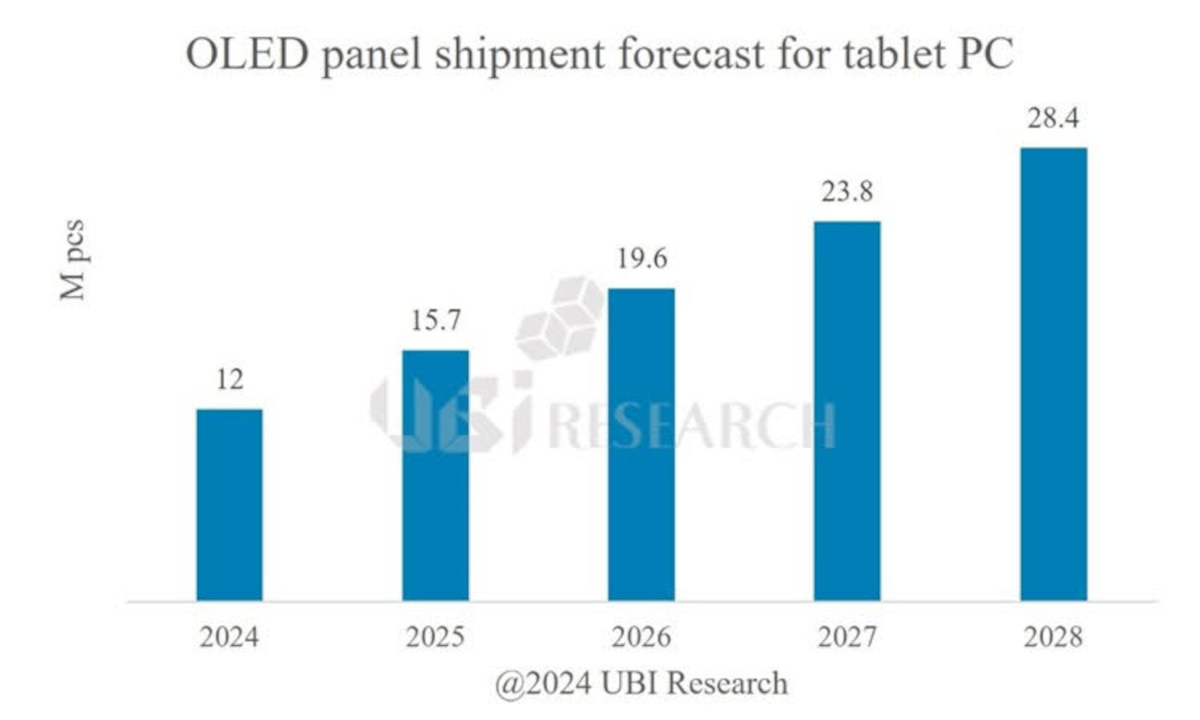
UBI says that the market in 2023 was only 1.8 million panels - so growth in 2024 will be dramatic (almost 7X), mostly thanks to Apple's adoption of OLEDs in some of its iPad modules (expected to be announced next month). Samsung will produce 11" panels for Apple, while LGD will produce larger 12.9" panels.
UBI: the foldable OLED market will grow to 52.7 million units in 2028, Samsung Display to remain the market leader
UBI Research released its latest foldable OLED shipments forecast, saying that it expects the market to grow from 27.4 million units in 2024 to 52.7 million 2028.
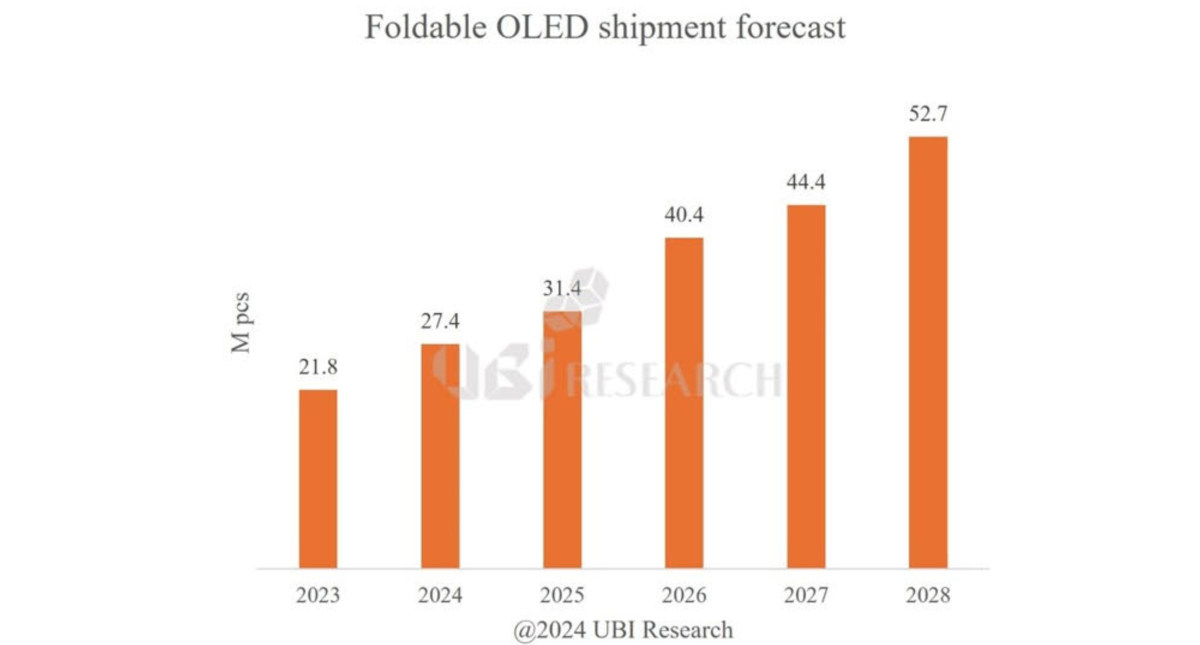
The market is dominated by Samsung Display, which shipped 13.4 million foldable OLEDs in 2023, and holds a 61% market. Samsung is followed by BOE (6.2 million, growing 3X from 2022), TCL CSOT (1.1 million) and Visionox (1.1 million). UBI expects Samsung Display to remain the clear leader in this market as it is the sole supplier to Samsung Electronics - and it is also expected that Samsung will be the exclusive supplier to Apple's future foldable iPhones.
Reports suggest low yields at SDC's fab causes Apple to delay the launch of its first AMOLED tablets
In January 2024 we reported that Samsung Display and LG Display have started to produce AMOLED displays for Apple's future iPads, to be announced later this year. Earlier expectations were for Apple to order a total of 10 million iPad AMOLED displays in 2024 from both LGD and SDC, with LGD getting around 60% of the orders.
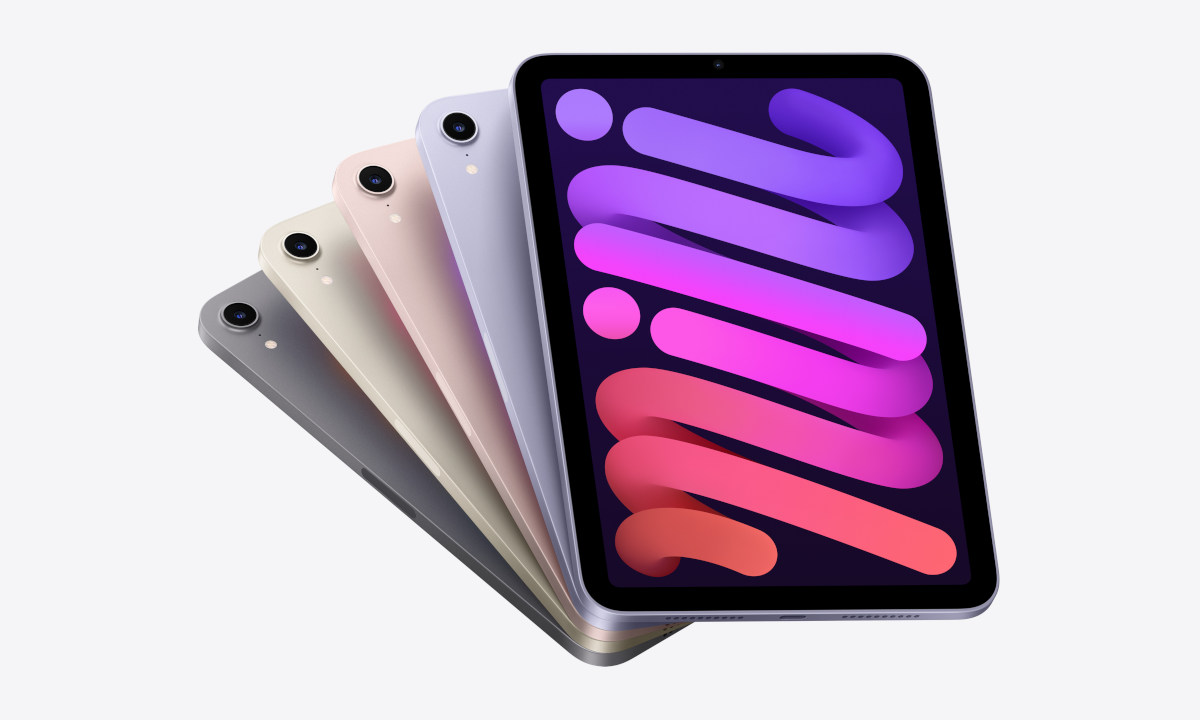
Apple was aiming to launch the new OLED iPads this month, but have now reportedly delayed the release to May, as Samsung is suffering from low yields for the 11" AMOLED panels, mostly due to the tandem stack architecture.