A senior researcher formerly working at Samsung Display sentenced for 6 years in prison for OLED trade secrets
In 2021, we reported that two researchers working at Samsung Display were convicted of handing over OLED technology to other companies, and are being sent to prison for two years. There was another employee, the main organizer of the outfit, who was also facing trial - and now it is reported that he was sentenced for 6 years in prison.
The researcher was accused of illegally acquiring trade secrets - technologies related to OLED ELA (Excimer Laser Annealing, used to process a-Si into LTPS backplanes) and OCR used in OLED inkjet printing processes. The researcher has acquired these technologies and intended to sell them to Chinese companies in in 2018 - 2020. The prosecution said that the trade secrets' worth was at least $250 million USD.
New OLED gadget: HMD Skyline
HMD's Skyline smartphone offers a 6.55" 144Hz 1000 nits 1080x2400 flexible AMOLED display (produced by LGD), a Snapdragon 7s Gen 2 chipset, up to 12GB of RAM and up to 256GB of storage.

The Skyline phone is now shipping for around $550.
Xiaomi announced four new AMOLED devices, including two new foldable smartphones
Xiaomi announced four new devices, all with high-end AMOLED displays. First up we have the Mix Fold 4, a foldable smartphone that has a 7.98" 120Hz 3000 nits 2224x2488 foldable LTPO AMOLED display, and a second 6.56" 120Hz 3000 nits 1080x2520 LTPO external AMOLED display.

Xiaomi's Mix Flip is a clamshell smartphone that offers a 6.86" 120Hz 3000 nits 1224x2912 foldable LTPO AMOLED, with a secondary 4" 120Hz 3000 nits 1392x1204 AMOLED display.
LG Display developed new tandem OLED technology to increase brightness and efficiency by 20%
According to a new report by Business Korea, LG Display is finalizing the development of its 3rd-gen tandem-stack automotive OLED technology, and aims to start mass producing these panels by 2026. LGD believes the new panels will improve the brightness and efficiency of its OLEDs by 20% (compared to its current 2nd-gen tandem OLEDs).
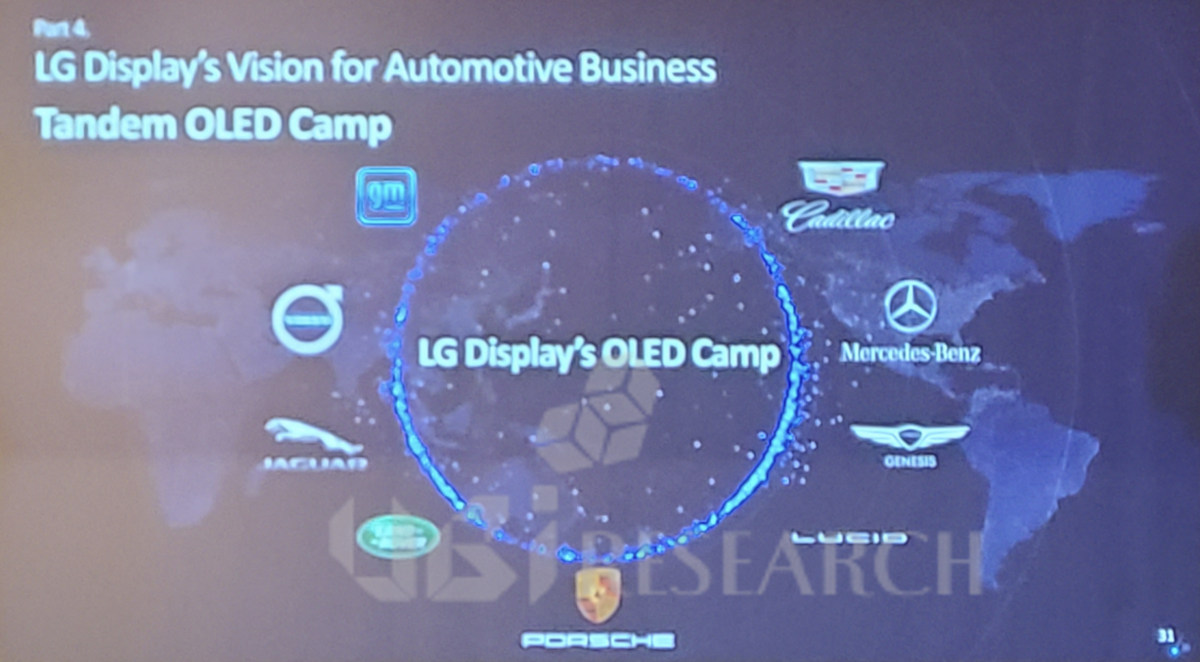
LG Display believes it is leading the industry with its tandem OLED technology (and we tend to agree) and it hopes to accelerate its technology development to widen its lead. LG Display is enjoying a lead in the automotive display market with its OLED solutions and has already achieved design wins with many companies, including Genesis, Mercedes-Benz, Cadillac and GM.
New OLED gadget: OnePlus Nord 4
The OnePlus Nord 4 smartphone offers a 6.74" 120Hz 2150 nits (peak) 1240x2772 Fluid AMOLED, a Snapdragon 7+ Gen 3 chipset, up to 16GB of RAM and up to 512GB of storage.

The OnePlus Nord 4 will ship in August 2024, starting at around $550.
The US sends a Russian citizen to 3 years in prison for smuggling OLED microdisplays to Russia
In September 2023, the New York State Attorney arrested a Russian citizen called Maxim Marchenko, and two other co-conspirators, accusing them of buying $1.6 million worth of military-grade OLED microdisplays and smuggling these to Russia. The US export control laws forbid the sale of such components to Russian companies.
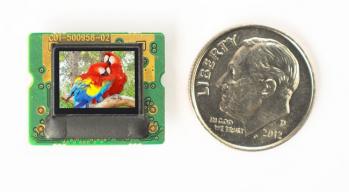
Earlier this week, Maxim Marchenko was sentenced to three years in prison followed by three years of supervised release for his role in procuring the dual-use, military grade OLED micro-displays.
New OLED gadget: Honor Magic Vs3 / Magic V3
The Honor Magic Vs3 is a foldable smartphone that offers a 7.92" 120Hz 2156x2344 foldable LTPO AMOLED display, an external 6.43" 120Hz 1060x2376 LTPO AMOLED display, a Snapdragon 8 Gen 2 chipset, up to 16GB of RAM and up to 1TB of storage.

The Magic V3 has the same display but with stronger specifications. Both phones will ship soon starting at around $1,100 for the Magic Vs3.

