Global OLED emitter developers: comprehensive analysis
Read the full story
Posted: Dec 29,2025
We are launching a new OLED-Info Pro premium article series, spotlights on OLED companies. Each article will look into one OLED industry company, detailing its past, present and future. In this first article, we are focused on Pioneer, the first company to produce OLED displays commercially.

Pioneer Corporation was established in 1938, in Tokyo, by Nozomu Matsumoto. The company started out as a radio and speaker repair shop, under the name Fukuin Shokai Denki Seisakusho. Matsumoto developed a dynamic speaker, and named it the A-8 "Pioneer". In 1961, the company name was changed to Pioneer Electronic Corporation, inspired by the A-8 Pioneer speaker. This was a suitable name - the company was indeed a pioneer in the audio industry - it launched the first separate stereo system in 1962, the first component car stereo system in 1975 and the first car CD player in 1984.
In July we reported that Japan Display decided to halt its OLED production at its Mobara Fab, its only OLED production line, by March 2026. As a consequence, the company will no longer supply panels to Apple.
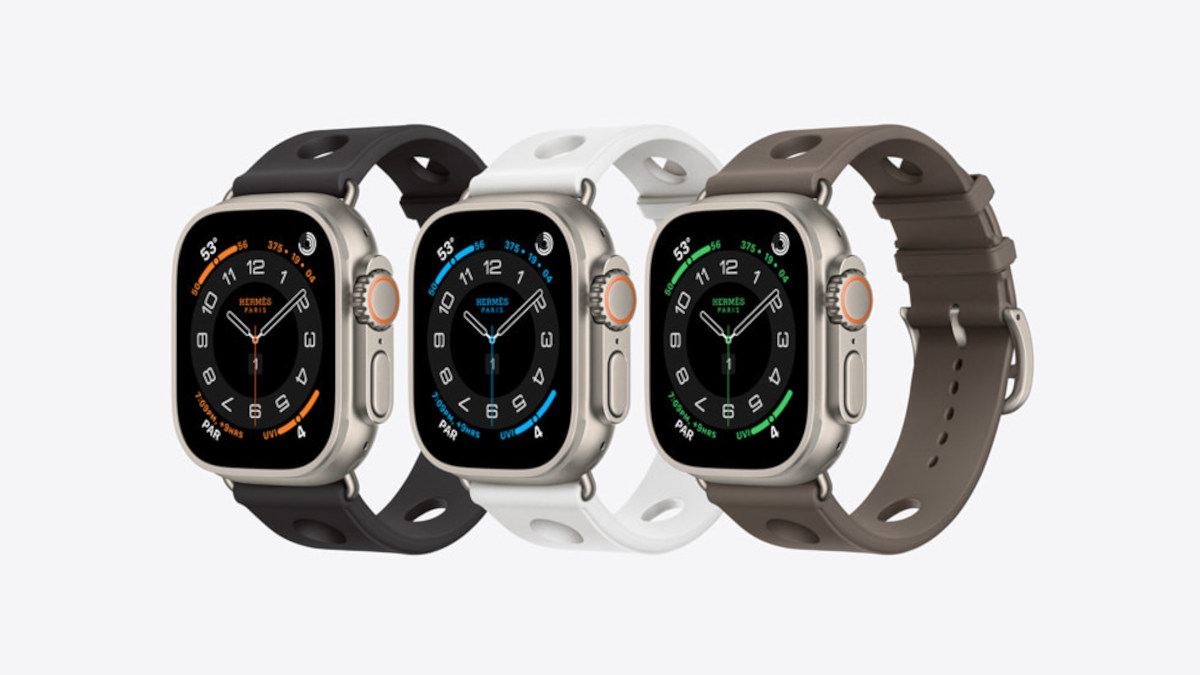
According to reports, Apple will exclusively use LG Display as its smartwatch OLED supplier in 2026. As Apple's expects to increase orders in 2026 by almost 20%, LGD's wearable OLED shipments are expected to increase quite dramatically as it will also take over JDI's share.
Stacked, or tandem, OLED architecture involves integrating multiple OLED emission units vertically within a display panel, rather than just one as in traditional OLEDs. By stacking these layers, each can contribute to the overall light output, enabling higher brightness and efficiency – and also longer lifetime as each OLED device is driven at a lower current. Technically, a tandem device includes exactly 2 layers, but this term is now loosely used to describe any stacked OLED.

Standard RGB OLED stack, vs Tandem RGB stack (source: Excyton)
The stacked OLED structure is particularly valuable for applications where high brightness (including in HDR scenarios), efficiency (although this is not dramatic) and durability are essential – mostly IT devices (laptops and tablets), microdisplays and automotive displays. OLED TV panel makers have also adopted stacked architectures, but for slightly different reasons (which we will discuss below). Companies are developing novel stacked based architectures. In this article, we discuss:
China-based LCD maker HKC aims to become an AMOLED producer, and we now have more details on its strategic plans. In 2023, HKC started a collaboration with JDI to build an eLEAP AMOLED production line in China. These plans were canceled towards the end of 2023, but the company continued to develop its AMOLED technologies, and in early 2025 it acquired Royole's AMOLED production line equipment.

Earlier this month HKC produced its first AMOLED display sample - a smartphone type panel, produced on an advanced Oxide-TFT (IGZO) backplane.
Japan Display, who's been in financial problems for many years, has decided to halt its OLED production at its Mobara Fab, its only OLED production line. As a consequence, the company will no longer supply panels to Apple. The Mobara fab will end production by March 2026.

Beyond being good news for LG Display (Apple's other main wearable OLED panel supplier), this is a sad ending to JDI's OLED fab. The company been considering moving the production equipment to its Ishikawa LCD line but has apparently decided instead to try and sell the OLED production equipment.

