Spotlight on LG Display - the WOLED pioneer, Apple's second OLED supplier, and its new bet on maskless OLED production

LG Display (LGD) is the world's second-largest OLED producer by revenue, and the company that turned OLED TVs from a prototype into an industry. It is also the only display maker with volume positions at both ends of the OLED market: large-area WOLED panels for TVs and monitors, and small and medium flexible AMOLEDs for smartphones, watches, tablets and cars.

LG Display logo

After three years of heavy losses, a rights offering, a loan from its parent and the sale of its last large-area LCD fab, LG Display returned to an annual profit in 2025 - and in August 2026 it formally launched FLiPP, a maskless OLED production process that is its answer to the 8.6-Gen IT OLED fabs its rivals are building.

In this Spotlight we look at how LG Display got here, what it can actually produce today, where each of its OLED businesses stands, what the numbers say, and what we expect over the next three to five years. We also take a brief look at LG Electronics, LGD's parent and largest OLED TV customer.
Read the full story Posted: Oct 07,2026

Carbon Nanotubes as NIR OLED emissive layers

This lecture by Dr. Shabnam Ahadzadeh from Hasselt University, discusses the use of carbon nanotube thin films as an emissive layer in near-infrared (NIR) OLED devices. The talk discusses why CNTs are the "perfect" NIR light emitters, the performance of these devices, and the novel spray-coating based deposition method developed at the University (in collaboration with researchers from the University of Antwerp). 

Watch the Video Posted: Oct 05,2026

Researchers develop an ultrathin, skin-like transparent OLED with 80.7% transmittance

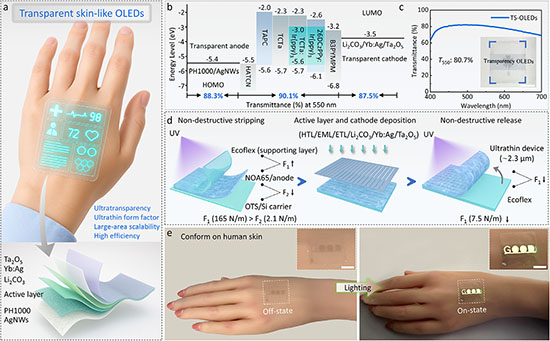
Researchers from China's Northeast Normal University and Jilin Normal University have developed an ultrathin, skin-like transparent OLED. The 2.3 µm thick device transmits 80.7% of light (at 550 nm), which the researchers say is higher than any earlier flexible transparent OLED, and it can be laminated directly on skin.

Design concept of the transparent skin-like OLED: device structure, transmittance spectrum, transfer process and the device laminated on skin, off and on

To achieve this, the researchers redesigned both of the OLED's electrodes. The bottom anode uses microwave-welded silver nanowires embedded behind a smooth PEDOT:PSS conducting polymer layer, which keeps the wires from puncturing the organic layers. The top cathode is a 9 nm ytterbium-doped silver film on a lithium carbonate layer, capped with tantalum oxide to improve transparency. As both electrodes are almost equally transparent, the device emits light from both sides. Counting both sides, the green OLED reaches a peak current efficiency of 87.2 cd/A and an EQE of 24.9%.

Read the full story Posted: Oct 03,2026

Researchers develop a novel non-destructive way to calculate the lifetime of blue phosphorescent OLEDs

Researchers from KAIST with colleagues from Hanbat National University, Kyung Hee University, and the Applied Surface Technology Ascend (ASTA) institute have developed a novel non-destructive methods to find the lifetime of blue phosphorescent OLED devices. This could lead to faster and cheaper way to design new PHOLED emitters, as there's no need for long age tests.

The researchers have demonstrated that the operational lifetime of blue phosphorescent OLEDs quantitatively correlates with the electroluminescence (EL) response under magnetic fields. This behavior is explained by a magneto-EL response function that reflects degradation-sensitive spin-pair kinetics under magnetic fields.

Read the full story Posted: Oct 02,2026

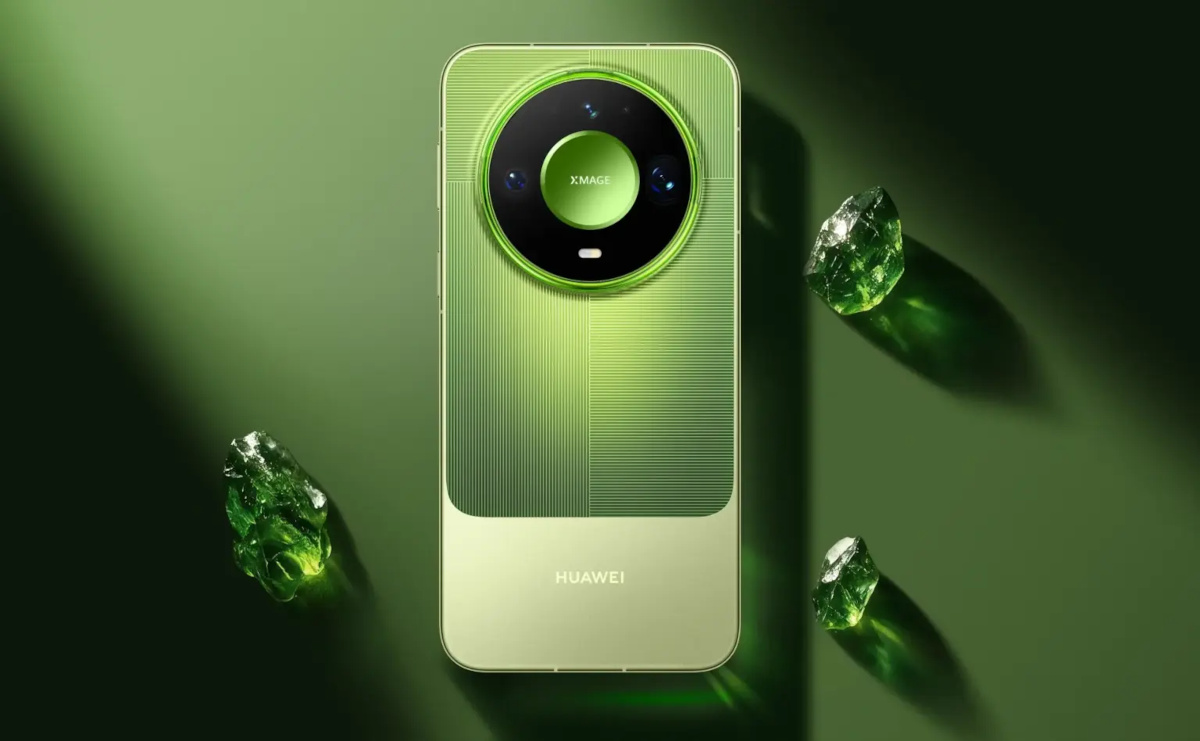
Huawei launches the Mate 90 smartphone family, sporting the world's brightest display at 12,000 nits

Huawei announced its new flagship Mate 90 smartphone family. All three phone models sport high-end LTPO AMOLED displays, produced by BOE. The two higher-end modules utilize BOE's latest tandem-stack OLEDs, achieving a peak brightness of 12,000 nits - to claim the world's brightest smartphone display ever.

Huawei Mate 90 smartphone

We'll start with the standard Mate 90, that offers a 6.75" 120Hz 1280x2832 LTPO AMOLED, protected by Huawei's latest Kunlun Glass 3.

Read the full story Posted: Oct 02,2026

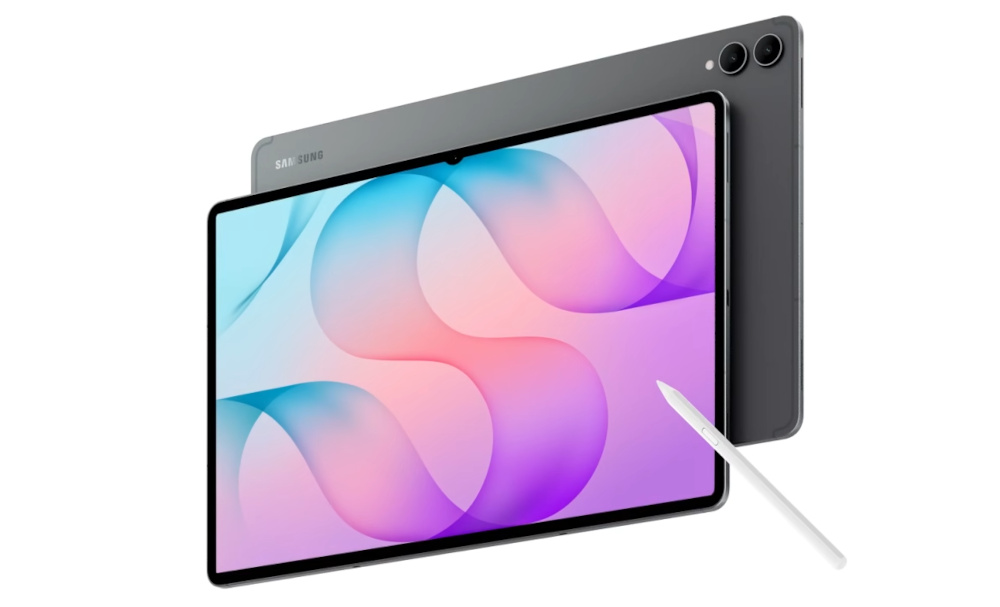
New OLED gadget: Samsung Galaxy Tab S12+ / S12 Ultra

Samsung's Galaxy Tab 12+ sports a 12.6" 120Hz 1600 nits (peak) 1752x2800 AMOLED display (produced by SDC) and a 3 nm MediaTek Dimensity 9500 chipset.

Samsung Galaxy Tab S12 Ultra

The Galaxy Tab 12 Ultra, Samsung's flagship tablet, offers a 14.6-inch 2960x1848 AMOLED, a MediaTek Dimensity 9500 paired with an upgraded 3D Vapor Chamber for superior sustained cooling, and up to 16 GB of RAM and 1TB of storage (with a microSD slot).

Read the full story Posted: Oct 01,2026

O-Vision (Aoshi) Technology progresses with its 12-inch OLED microdisplay line in Hangzhou

O-vision (Aoshi) Technology announced that it has received the permit from the local government of Zhejiang province, to go ahead with its plan to build its 12-inch OLED microdisplay fab in Hangzhou. O-Vision Aoshi will also build its new headquarters and a new R&D center in the same location.

Aoshi Technology Hangzhou HQ and 12-inch OLED line render

In May this year, Aoshi Technology raised 100 million RMB (almost $15 million USD), in its Series B funding round. The funds will mostly be invested into the construction of its new fab, known as the K2 factory (not to be confused with BCDTek's K2 OLED microdisplay fab). The K2 will have a monthly capacity of 5,000 wafers, and Aoshi says it will enter mass production by the end of 2027. Aoshi currently operates a small-scale pilot line (K1) in Nanhai, Foshan. 

Read the full story Posted: Sep 30,2026